Last updated November 22, 2026
 Raised-panel steel
 Carriage house
 Modern flush
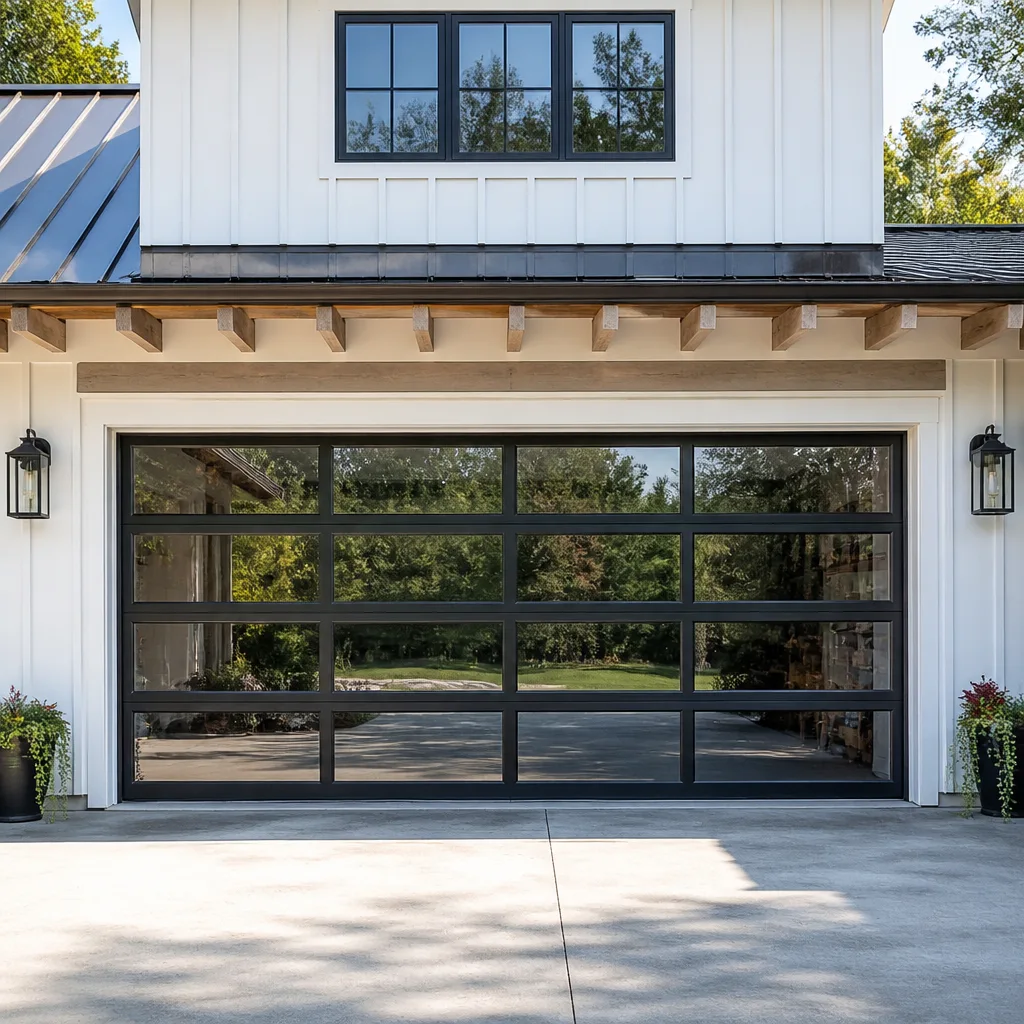 Full-view glass
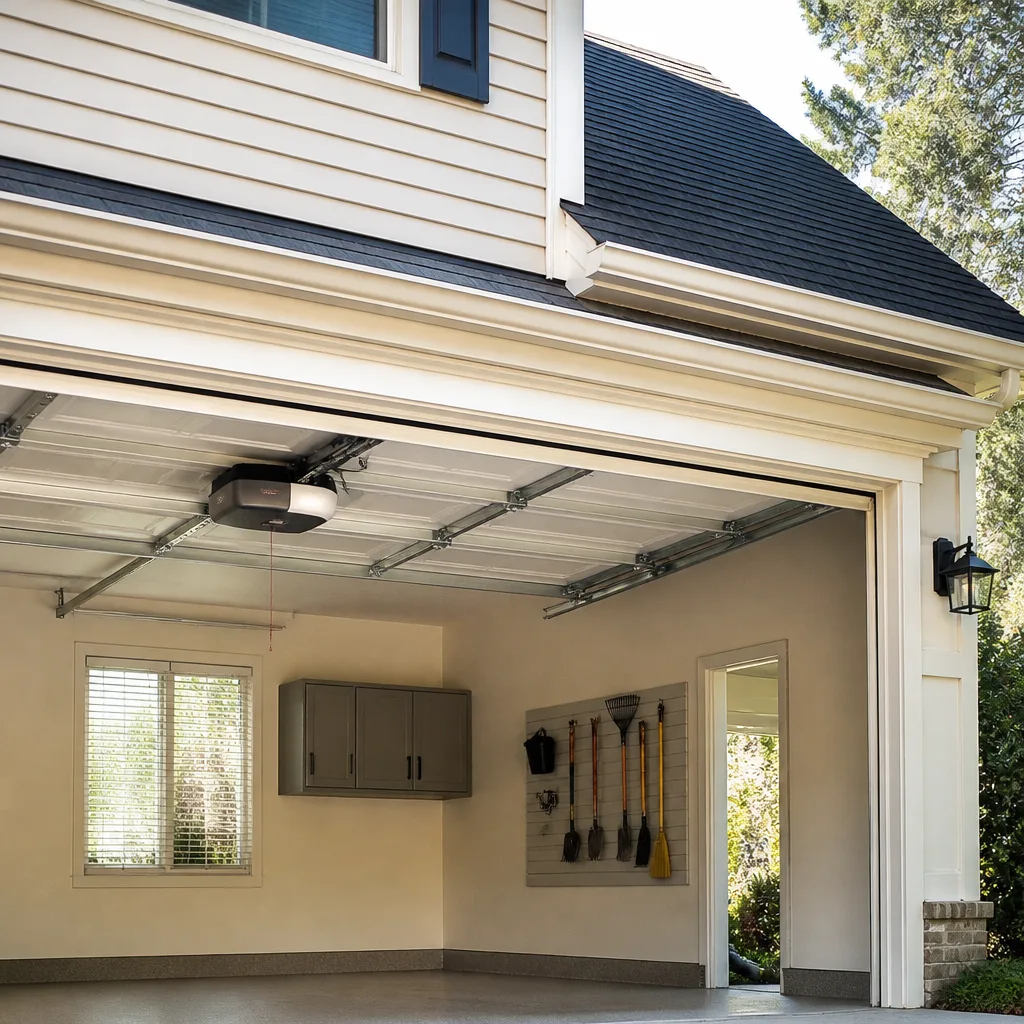 LiftMaster openers
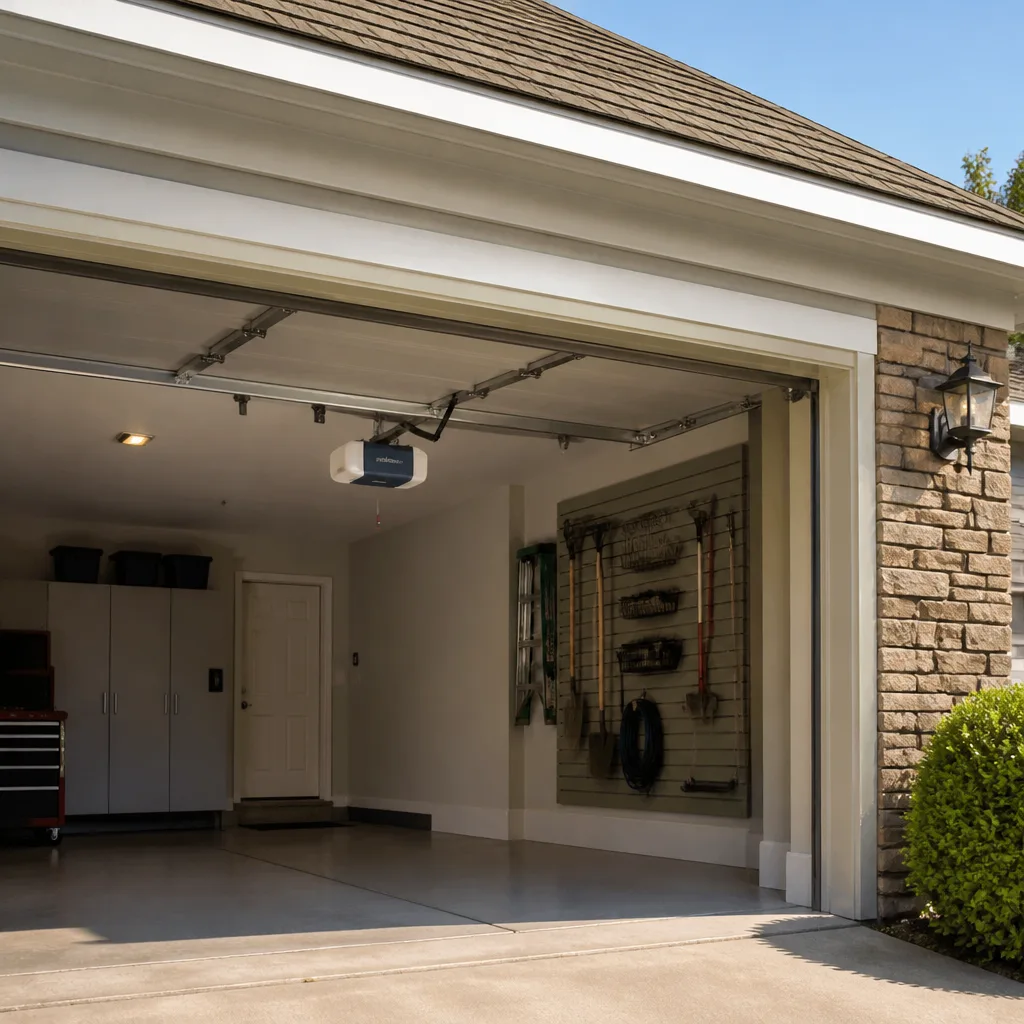 Chamberlain openers
Full 25-point door and opener safety check with every visit - springs, cables, rollers, tracks, and your LiftMaster or Chamberlain opener included
You get a price before we start. It does not change when the pro arrives.
Get your free estimateThe Complete Guide to Garage Doors in Newton
Newton has 13 distinct villages, and the garage door decision that works for a 1920s Newton Centre colonial will cause problems on a 1970s Newton Highlands split-level. That’s the part most buying guides skip. They treat a garage door as a product you pick off a shelf, when in Newton it’s really a fit between three things: the age of your house, the size of your opening, and the way freeze-thaw works on wood and steel through a Massachusetts winter. This guide walks through all of it, from material choice to opener sizing to what insulation numbers actually mean here. You’ll learn how to read your own garage before you spend a dollar in Newton.
Quick Answer
The right garage door for a Newton home depends on your rough opening dimensions, your village’s architectural rules, and how much insulation your attached or detached garage actually needs. Steel and insulated steel dominate because they handle freeze-thaw with the least maintenance, but older Newton homes often have non-standard openings that rule out off-the-shelf doors entirely. Get the opening measured first, then choose material and opener to match.
Styles & brands we work with
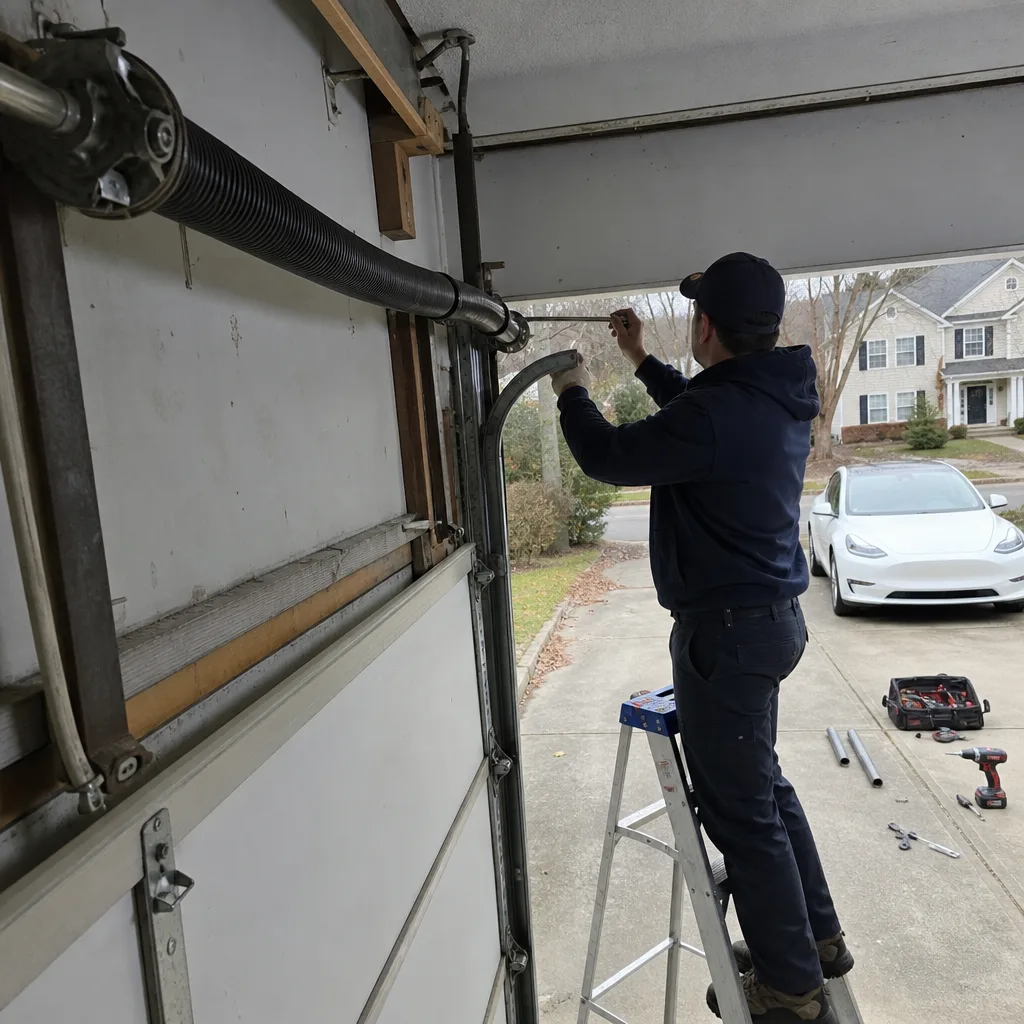
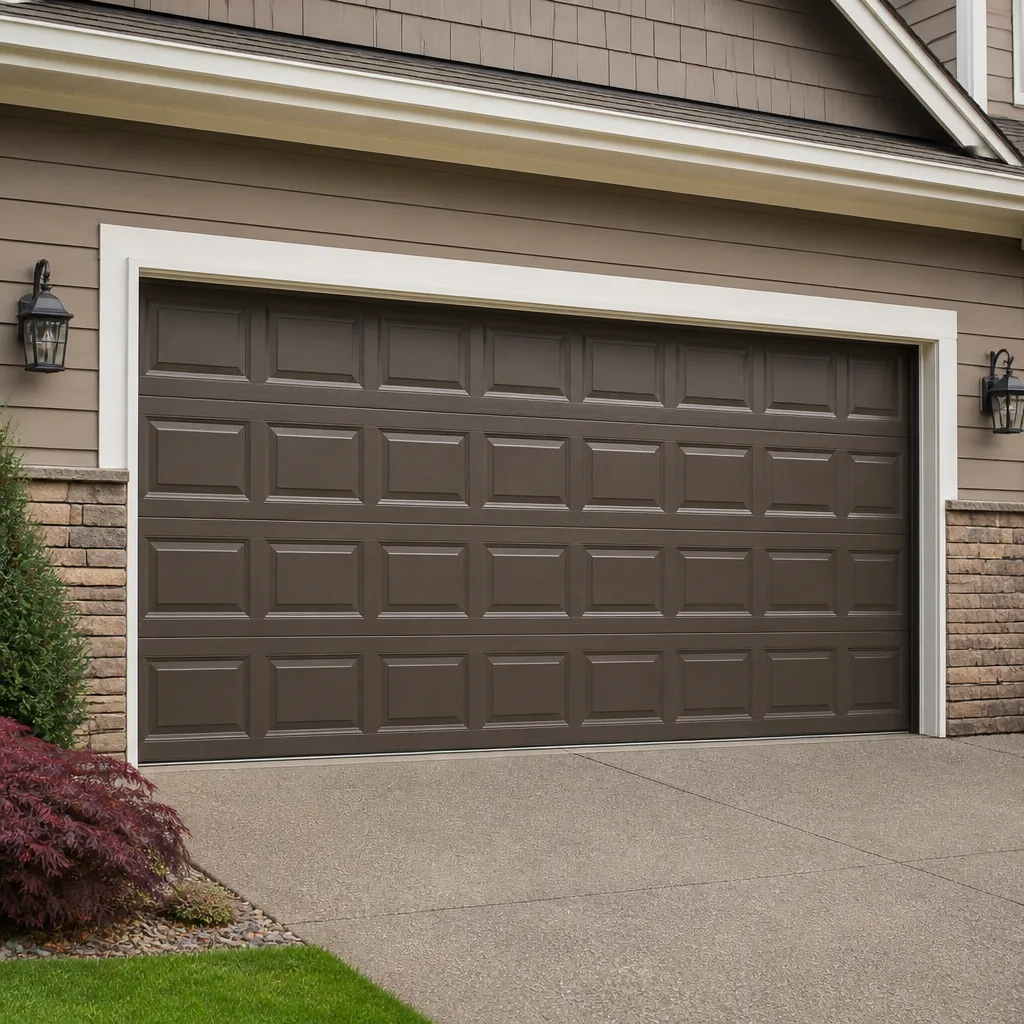
- Raised-panel steel
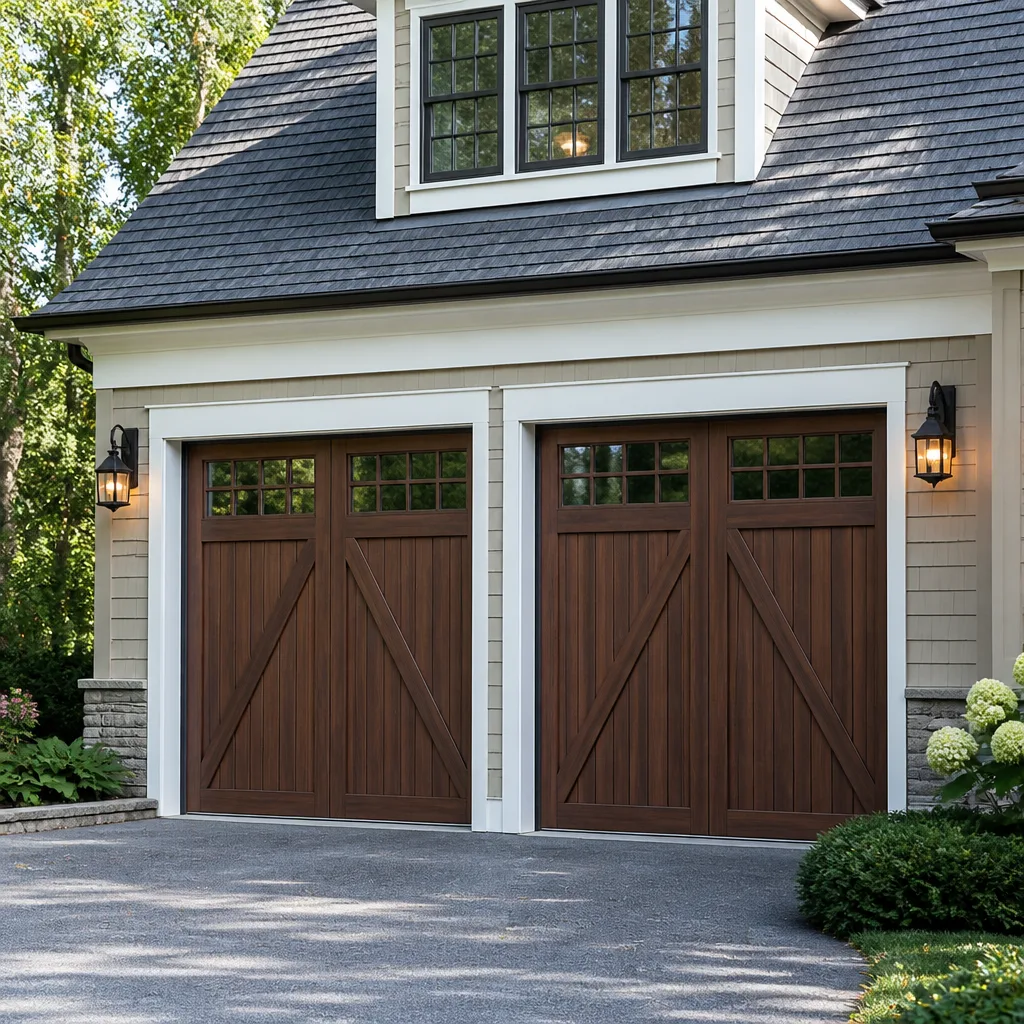
- Carriage house
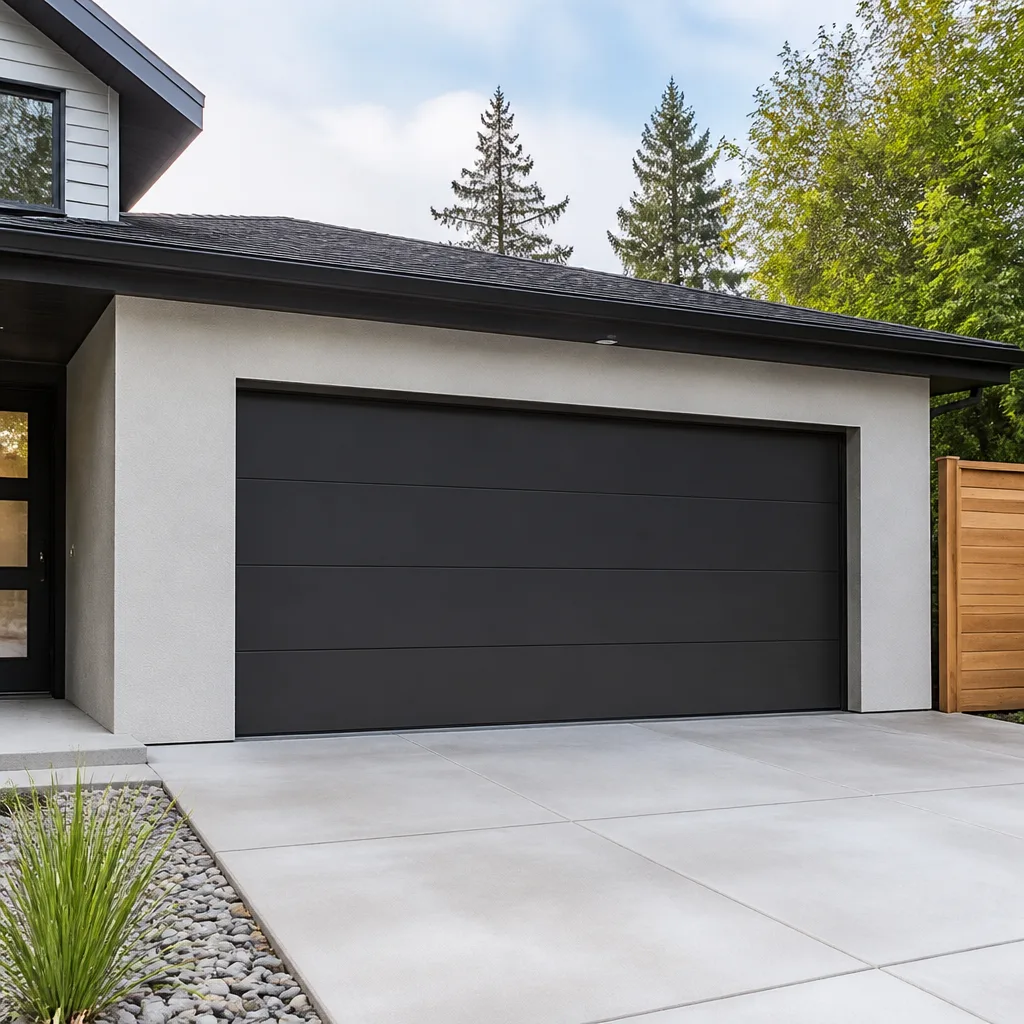
- Modern flush
- Full-view glass
- LiftMaster openers
- Chamberlain openers
Table of Contents
- How Does Newton’s Freeze-Thaw Cycle Affect Door Material?
- Village by Village: Common Garage Configurations in Newton
- Which Insulation R-Values Actually Matter in Newton?
- Why Older Newton Homes Have Non-Standard Rough Openings
- Choosing an Opener for Your Garage’s Size and Layout
- Single-Brand Dealer vs. Multi-Brand Service Provider
- Repair or Replace? A Decision Framework for Newton Homeowners
How Does Newton’s Freeze-Thaw Cycle Affect Door Material?
Newton averages 10 or more hard freezes each winter, and that cycle is the single biggest stress on a garage door in this climate. Water gets into seams, small cracks, and the gap around the bottom seal, freezes overnight, expands, and thaws by afternoon. Repeat that a hundred times a season and you start to see where each material gives.
Here’s how the main options hold up:
- Steel: Handles freeze-thaw best of the common options. The paint finish is what protects it, so a chipped or scratched panel is where rust begins. Insulated steel panels resist denting better than uninsulated ones because the foam core backs up the skin.
- Aluminum: Light and rust-proof, which sounds ideal until you factor in denting. Aluminum panels dent from a stray ball or a bump with a recycling bin, and dents hold moisture in the seams.
- Wood composite: The best curb-appeal match for Newton’s Victorian and colonial housing stock. It needs the finish maintained, because bare or checked wood soaks up meltwater and swells at the joints. If you want the look and will keep up with the paint, it works. If you won’t, steel with a woodgrain finish gets you close visually with far less upkeep.
The bottom seal and the weatherstripping around the jamb matter as much as the panel material. A worn bottom seal lets meltwater pool against the door and freezes it to the floor. That’s one of the most common winter service calls in Newton, and it’s a cheap fix compared with a warped bottom panel.
Village by Village: Common Garage Configurations in Newton
Newton’s villages weren’t built to one plan, and the garage you have depends heavily on when your neighborhood went up. Knowing your configuration tells you what door and opener will work before anyone measures.
- Newton Centre and Newtonville: Many older colonials and Victorians here have detached single-car garages set back from the house, often with a low headroom. Detached garages are unheated, which means the door faces full temperature swings and the opener works in cold conditions. Low headroom usually rules out a standard torsion setup and points toward a low-headroom torsion or a jackshaft opener.
- Newton Highlands and Waban: Mid-century ranches and split-levels with attached two-car garages are common. Attached garages share a wall with living space, so insulation and a tight seal matter more here than curb appeal alone. Opener noise also travels into the house, so a belt-drive unit is usually the better call.
- Chestnut Hill: Larger homes with wider openings and more architectural detail. HOA and neighborhood aesthetic rules can restrict panel styles and colors, so confirm what’s allowed before ordering.
- Auburndale and West Newton: A mix of older detached garages and newer attached ones, which means the same street can have both a low-headroom single door and a full-height double.
One-car garages typically use a narrower door, which limits panel options in some product lines. Two-car garages with a single wide door put more load on the springs, so spring sizing is more critical. Two single doors side-by-side need two openers or one with the right capacity, and that changes the electrical and mounting plan. When you call for garage door repair in Newton, tell us the configuration up front and the diagnosis gets faster.
Which Insulation R-Values Actually Matter in Newton?
Newton sits in climate zone 5A, which means cold winters and warm summers. Insulation matters most when the garage shares a wall with living space, or when you use the garage as a workshop or gym. For a detached garage that holds a car and some storage, insulation is a comfort and noise benefit more than an energy one.
Here’s where the marketing numbers get slippery. Some manufacturers quote the R-value of the foam core alone, and some quote the whole assembled door. Those aren’t the same figure, and a door with a high core number can still lose heat through the frame, the seams, and the gaps at the edges. In our experience, what matters for a Newton home is:
- Whole-door R-value, not just the core. Ask for the assembled figure. If a manufacturer won’t give it, treat the number as a core-only value.
- Thermal breaks between the panels. Metal-to-metal contact across panel joints conducts cold straight through, no matter how thick the foam.
- A tight perimeter seal. A well-insulated door with a worn bottom seal leaks more conditioned air than a modestly insulated one with a good seal.
For an attached garage in Newton, an insulated door with thermal breaks and a good perimeter seal handles the climate well. For a detached garage, a basic insulated door is enough, and you’ll get more benefit from a quiet belt-drive opener than from chasing a higher R-value. When your opener is the problem rather than the door, garage door opener repair is usually straightforward.
Why Older Newton Homes Have Non-Standard Rough Openings
Off-the-shelf doors are sized for standard openings, and a lot of Newton’s older housing stock doesn’t have one. A rough opening is the framed hole in the wall the door sits in, and in homes built before standard sizing took hold, those dimensions were cut by hand. A few inches off in either direction takes you out of the catalog.
Here’s the order of operations that avoids wasted trips:
- Measure the opening, not the old door. Measure width at the top, middle, and bottom, and height at both sides and the center. Take the smallest of each set, because that’s the real opening.
- Check the headroom. Measure from the top of the opening to the ceiling. Low headroom in an older Newton garage changes which spring and track layout will fit.
- Check side clearance and backroom. A wide door needs room on each side for the track and a horizontal run behind. Tight clearances on an older garage are where standard doors fail to fit.
- Inspect the jamb framing. A freeze-thaw cycle works on the wood jamb too. Soft or checked framing needs attention before a new door goes on, or the door will ride crooked.
When the opening is truly non-standard, the answer is a made-to-order door in the right size, not a workaround with filler panels. Clopay and Amarr both build to custom dimensions, which is why we work with them on older Newton homes that a stock door can’t fit.
Choosing an Opener for Your Garage’s Size and Layout
Opener choice follows the garage, not the other way around. A one-car detached garage with low headroom has different needs than a two-car attached garage under living space. Here’s how the decision breaks down in Newton:
- Detached single-car garage: A chain or belt drive with modest capacity is plenty. If headroom is tight, a jackshaft opener mounts on the wall beside the door instead of on the ceiling.
- Attached two-car under living space: Belt drive keeps noise down and travels well through the structure. A battery backup feature is worth considering because Newton gets its share of winter power outages.
- Two single doors: Two openers, or one unit with the right capacity and two receivers. This is also where you want matched brands so the remotes and wall controls stay consistent.
We service the openers most Newton homeowners already have. LiftMaster, Chamberlain, Genie, and Craftsman drive systems cover the large majority of residential garages here, so diagnosis starts with the system installed, not a guess. A LiftMaster with a slipping belt and an older Genie with a stripped gear get different fixes. When a motor fails outright or a logic board gives out, garage door opener repair is the first call, because the hardware around the motor is often still good.
Single-Brand Dealer vs. Multi-Brand Service Provider
A single-brand dealer sells and services one manufacturer’s line, which keeps their parts and training narrow. A multi-brand provider works across several systems, which matters for long-term parts availability. In practice, the distinction shows up years after the door goes on.
When you buy through a single-brand dealer, your door and opener come from one ecosystem. That can be convenient, but it also means your repair options later are tied to that brand’s parts pipeline and whoever is authorized to install them. If that model is discontinued or the dealer moves on, you can be left hunting for a compatible part. We work on eight of the most widely installed residential brands: LiftMaster, Chamberlain, Genie, Clopay, Amarr, Wayne Dalton, Craftsman, and Raynor. That range means a replacement part usually comes from the brand that’s already on your wall rather than a workaround.
The practical test is a simple one: when your opener fails, can the same company fix it, and when your spring snaps, can they replace the exact one for your door’s weight? When it can’t, you’re sourcing contractors by component. For spring work specifically, a two-door attached garage, a heavy single door, and a low-headroom detached door all take different springs. Dedicated spring service handles the high-tension side of the system, and garage door spring repair is a job for someone trained on it, not a general handyman.
Repair or Replace? A Decision Framework for Newton Homeowners
Most of the garage doors we see in Newton can be repaired. The question isn’t whether a door is old, it’s whether the frame, panels, and hardware are still worth putting money into. Work through these questions in order:
- Is the structure sound? If the panels are rusted through, the wood jamb is soft from repeated freeze-thaw, or the frame is warped, replacement is the better call. A repair on a failing frame just delays the inevitable.
- Is it a spring, opener, or track problem? These are the most common failures, and most are fixable on their own. A snapped spring or a dead opener doesn’t mean the door is done.
- Are you chasing repeated repairs? One spring replacement is normal. Three repairs in a season across panels, rollers, and hardware starts to add up toward a replacement.
- Would a new door solve a comfort or curb-appeal issue? If the garage is under living space and the door leaks cold air, or the style clashes with the house, replacement may be worth it on those grounds alone.
Spring failure is the one case where speed matters more than the repair-vs-replace question. A door with a broken spring is a door that can drop, so keep it closed and call for help rather than running the opener. Reach the service at Newton Garage Door Repair Pros when a failure can’t wait.
Common Mistakes to Avoid
- Choosing a door before measuring the opening. Older Newton garages have hand-cut rough openings that don’t match standard sizes. Measure first, then pick the door, or you’ll return a door that never had a chance of fitting.
- Ignoring the freeze-thaw cycle when buying wood. A wood composite door looks right on a Newton colonial but needs its finish kept up. Let the paint check and the joints will swell every spring.
- Buying insulation by the core R-value alone. The whole-door figure and the perimeter seal matter more than a big number on the spec sheet. Ask for the assembled value.
- Putting a heavy door on an undersized spring. A two-car door with one wide panel weighs much more than a single. The wrong spring loads the opener and fails early.
- Trying a spring replacement yourself. High-tension torsion springs and the cables that run with them are under serious stored force. This is the one repair that causes real injuries, and a garage door is not the place to learn that lesson.
- Assuming your village allows the door style you like. Chestnut Hill and other villages have HOA and aesthetic rules. Confirm the panel style and color before ordering, not after delivery.
- Picking an opener without checking headroom. Low-headroom garages in Newton need a different spring and track layout, and sometimes a wall-mounted opener instead of a ceiling one.
See the difference
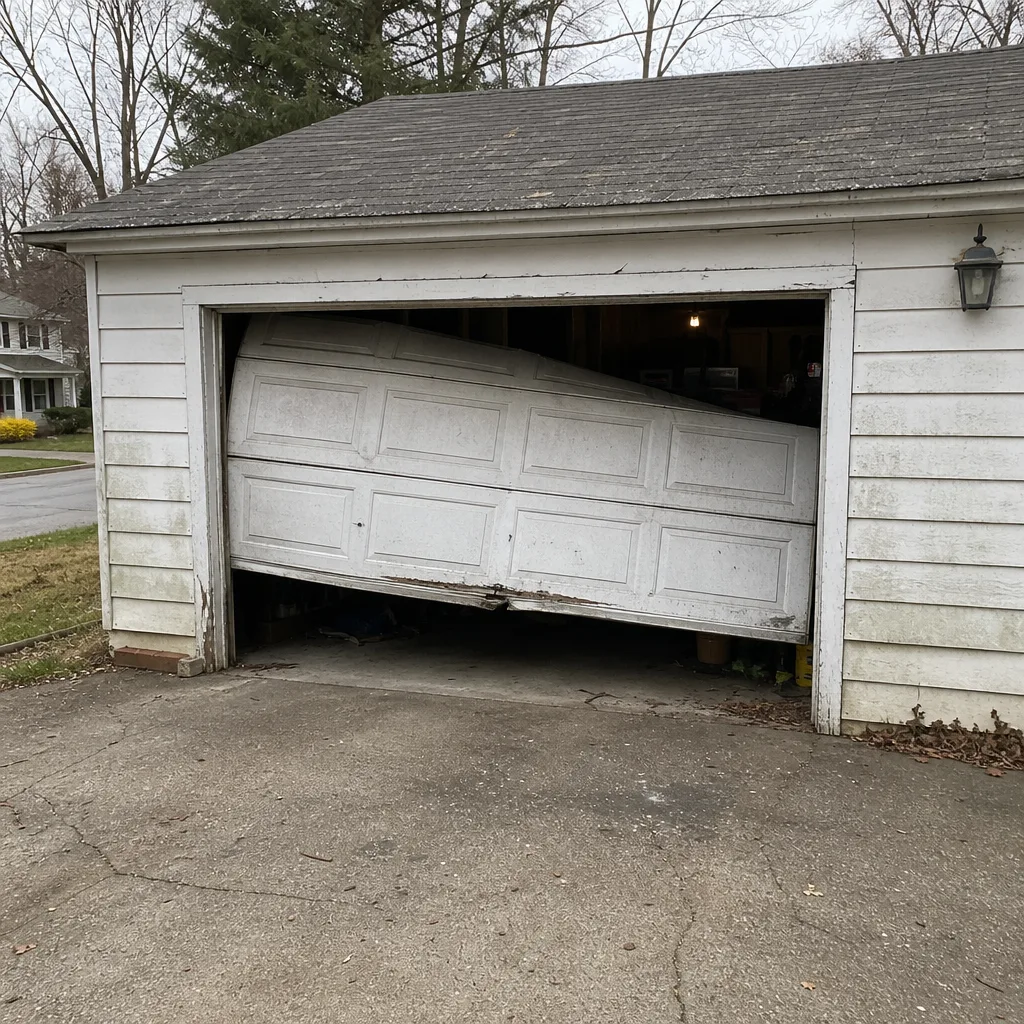 Before
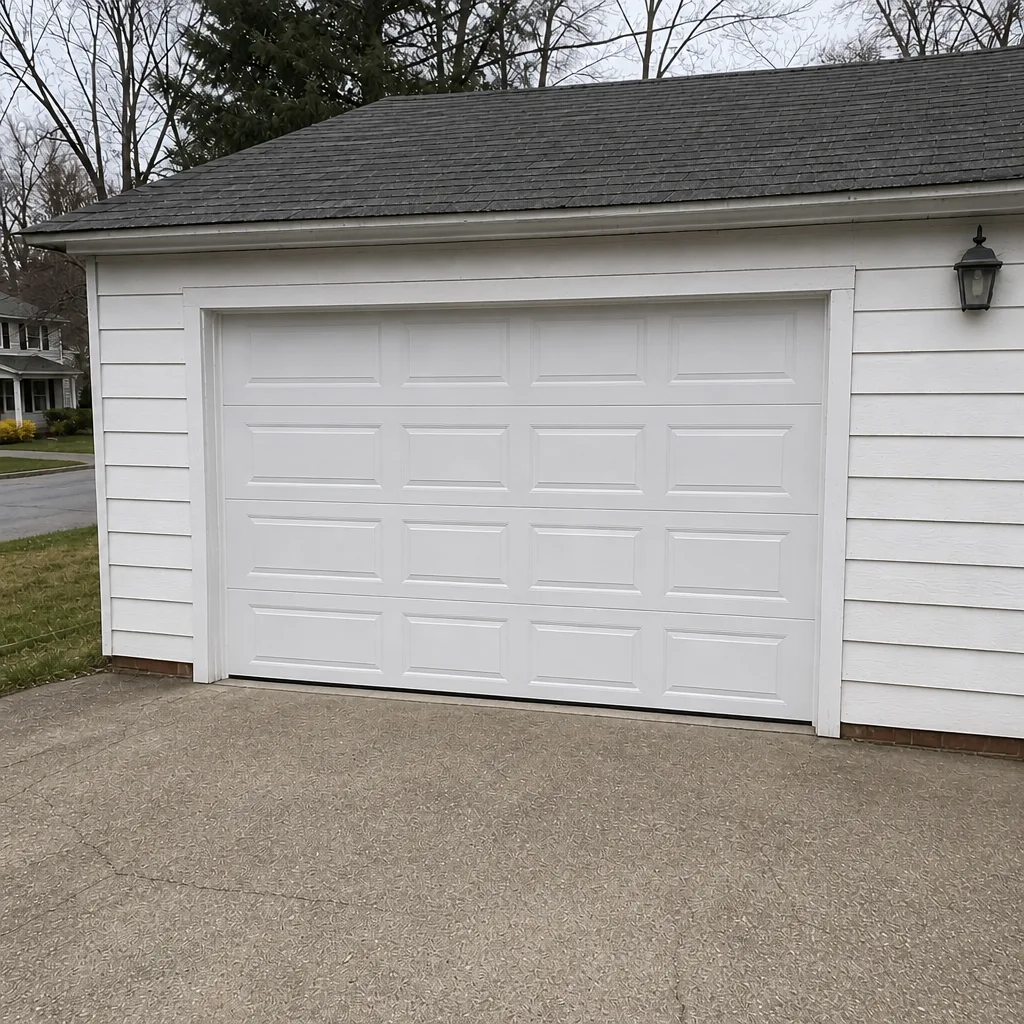 After
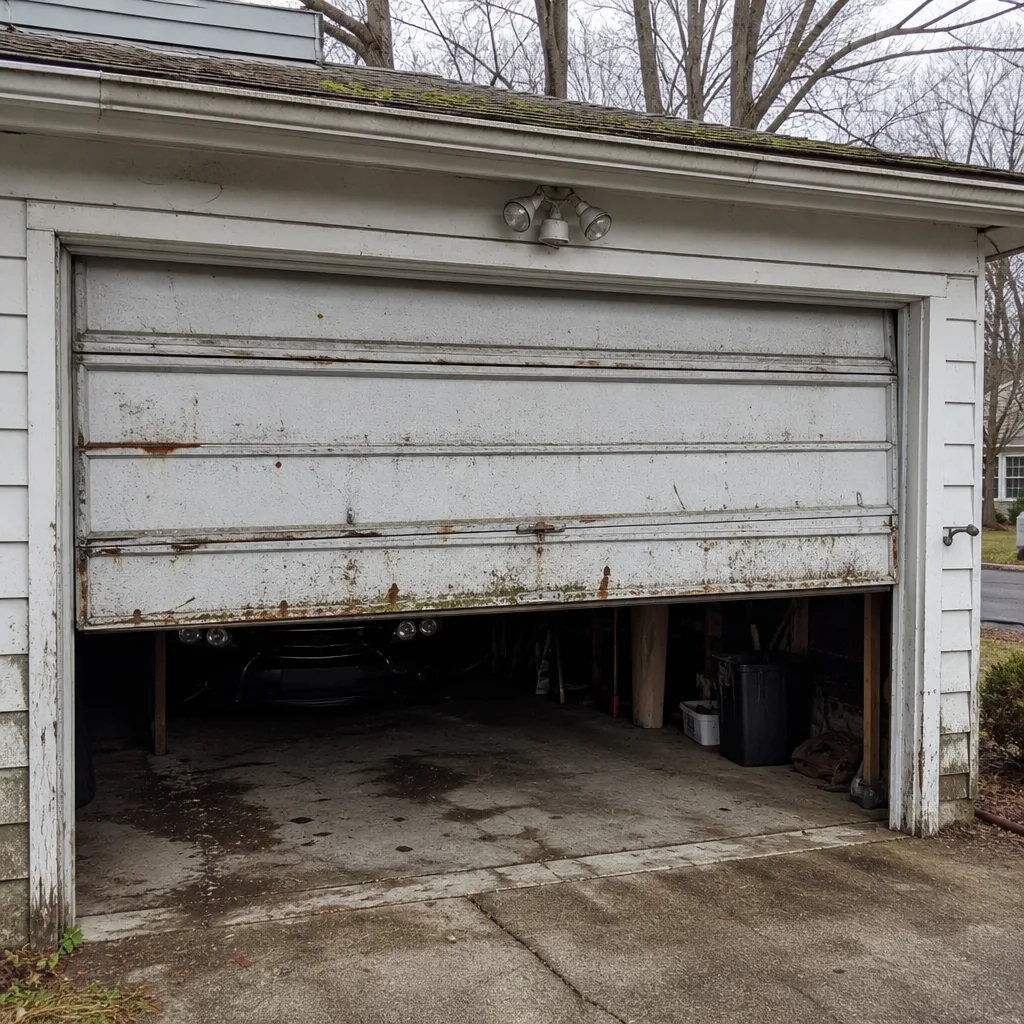 Before
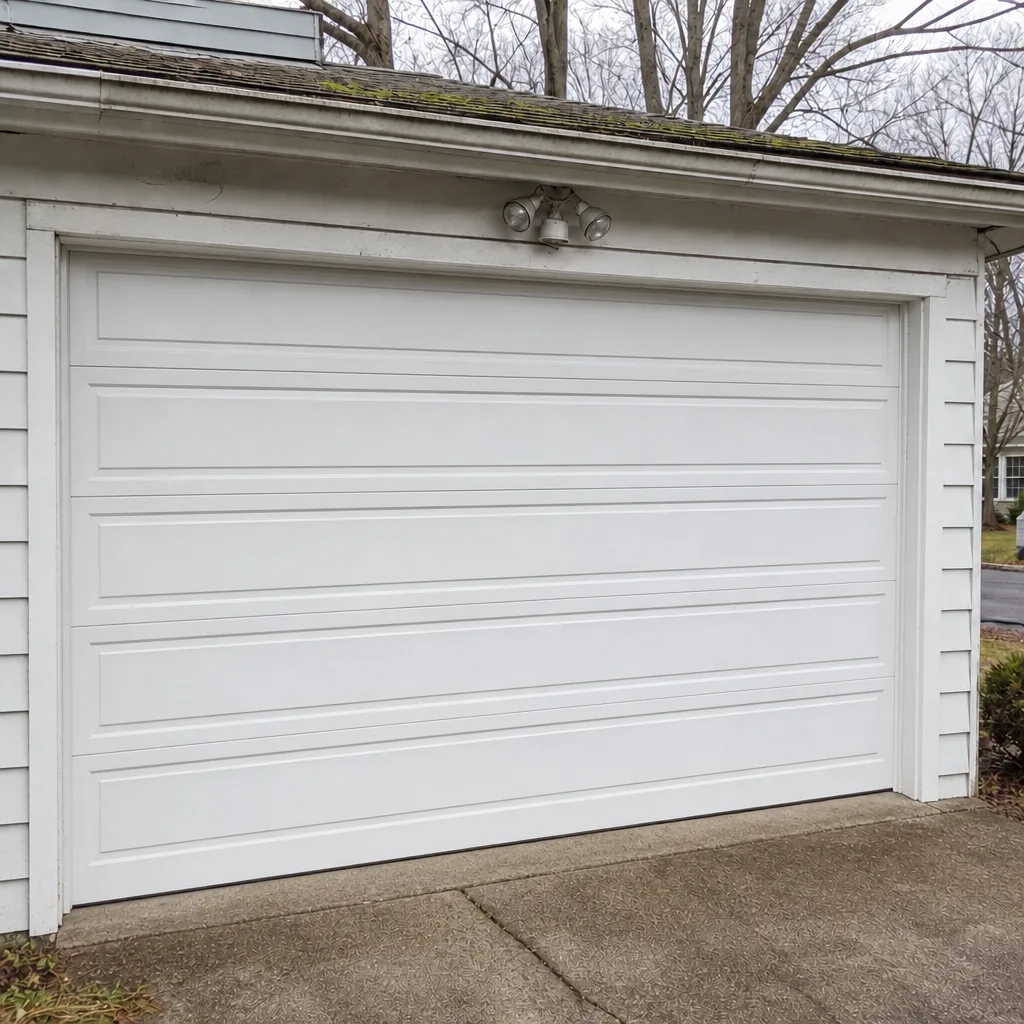 After
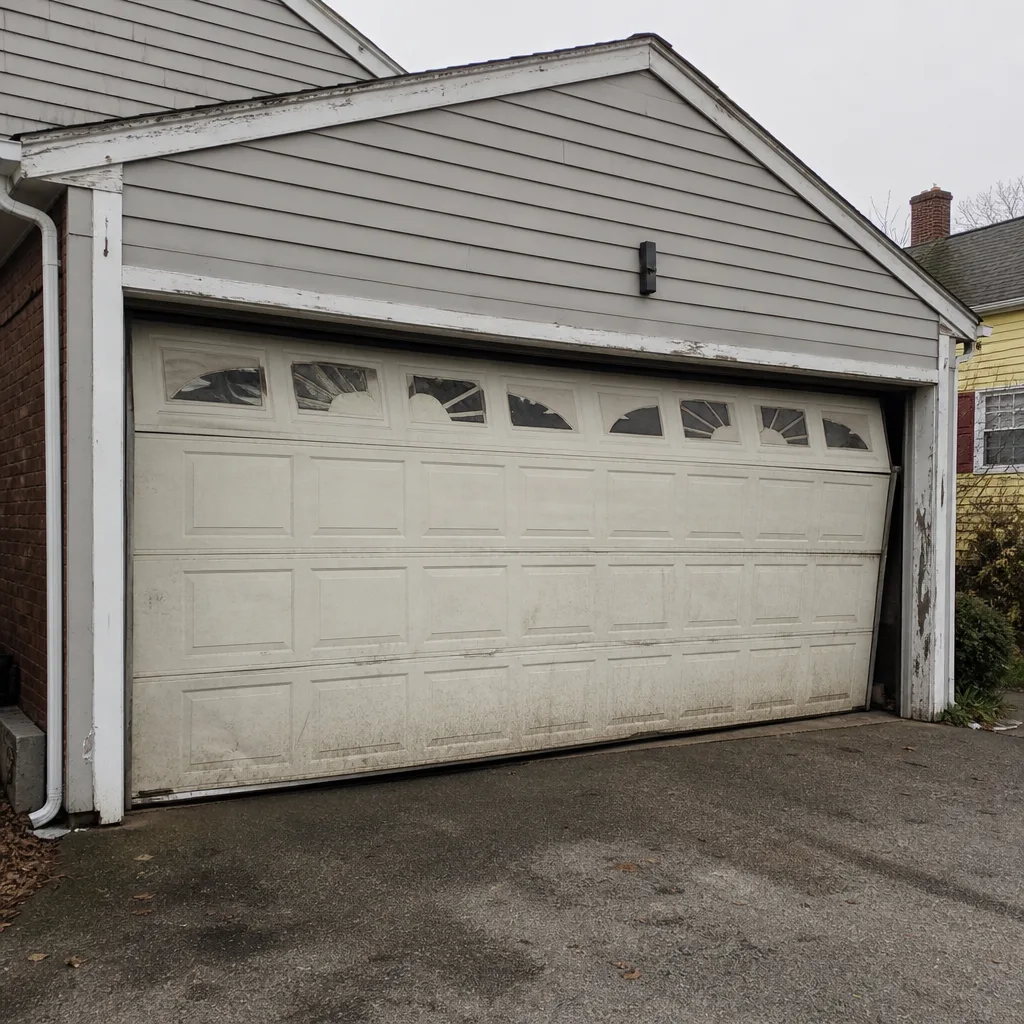 Before
 After
When to Call a Professional
Call a professional whenever a spring or cable is involved. Those parts store enough force to cause serious injury, and a trained technician handles them safely. A door that’s come off the track, a door that won’t close all the way because it’s binding on one side, or an opener that runs but won’t lift the door are all worth a call rather than a troubleshooting session. If your door fails to open and leaves you locked out or with an open, unsecured garage, emergency service can get it handled. Newton Garage Door Repair Pros offers free estimates in Newton, and we work on your brand, from LiftMaster and Chamberlain to Clopay and Amarr. Call (855) 337-1889.
Frequently Asked Questions
A new garage door in Newton typically runs from a few hundred dollars installed for a basic single panel to several thousand for a custom-size insulated door on a two-car garage, with the written estimate setting the final price. Cost depends on the size of your opening, the material, insulation, and whether the frame or jamb needs work. Call (855) 337-1889 for an exact quote; estimates are free and the price is agreed before any work starts.
Insulated steel holds up best to Newton’s freeze-thaw cycle because the paint finish protects it and the foam core resists dents. Aluminum dents and holds moisture in the seams, and wood composite looks right but needs ongoing finish maintenance. If you want the wood look, a steel door with a woodgrain finish is the lower-maintenance choice here.
Yes. A non-standard rough opening means you need a made-to-order door rather than an off-the-shelf one. Clopay and Amarr both build to custom dimensions, so measure the opening at the top, middle, and bottom before calling, then a technician confirms the size and specs a door that fits.
Measure the width of the opening, not the garage wall. A door around 8 to 9 feet wide is a single-car door; a door around 16 feet wide is a two-car door. Two separate single doors on a two-car garage count as two doors, and each needs its own opener or a receiver setup that covers both.
If the door won’t close and the garage is exposed, emergency service can come and secure it, and you can always call outside business hours to get on the schedule. If the door is closed but a spring is broken, keep it closed and call for a regular appointment; that’s not a case to force the door open. Call (855) 337-1889 to talk through the situation.
We work on LiftMaster, Chamberlain, Genie, Clopay, Amarr, Wayne Dalton, Craftsman, and Raynor. Eight brands cover the large majority of residential systems installed in Newton, so a technician diagnoses your actual system rather than offering a one-size-fits-all fix, and replacement parts usually come from the brand already on your door.
The Bottom Line
The right garage door for your Newton home starts with your house, not a catalog. Measure the rough opening, check the headroom and side clearances, and factor in the freeze-thaw cycle before you choose a material. Steel with good insulation and a tight perimeter seal handles a Newton winter with the least upkeep, while wood composite gives you the look if you’ll keep up with the finish. Pick an opener that matches your garage’s size, headroom, and whether it’s attached. And when you buy, favor a multi-brand service provider so parts stay available for the life of the door. When in doubt, a free estimate beats a guess.
Written by the team at Newton Garage Door Repair Pros.