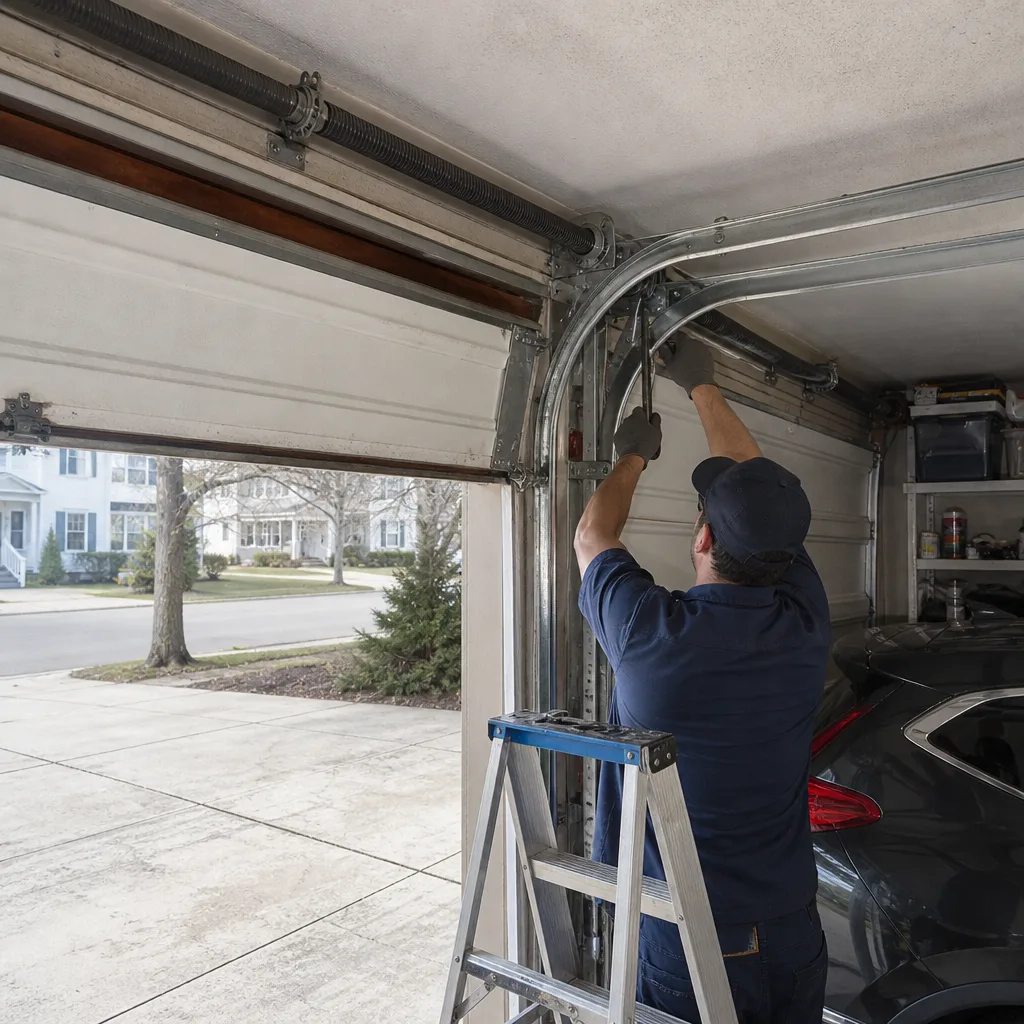
Last updated November 22, 2026
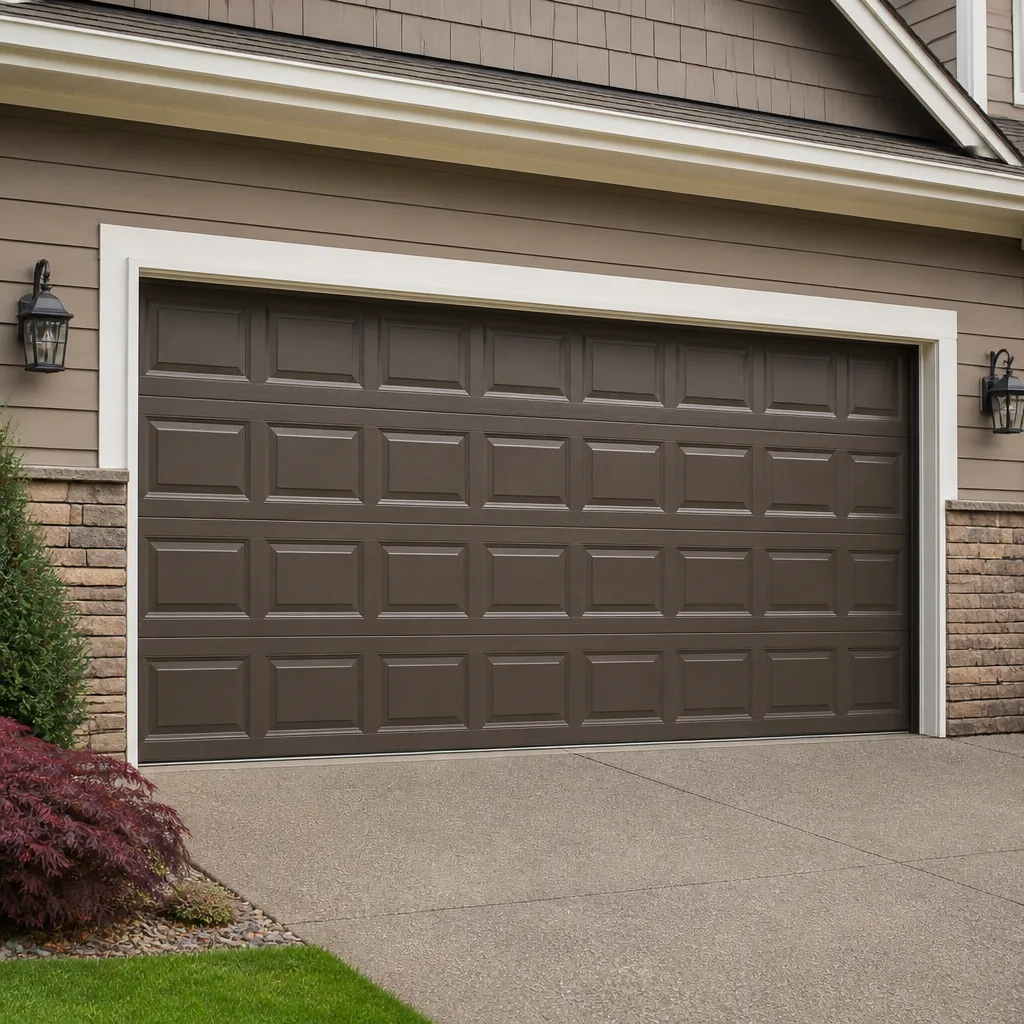 Raised-panel steel
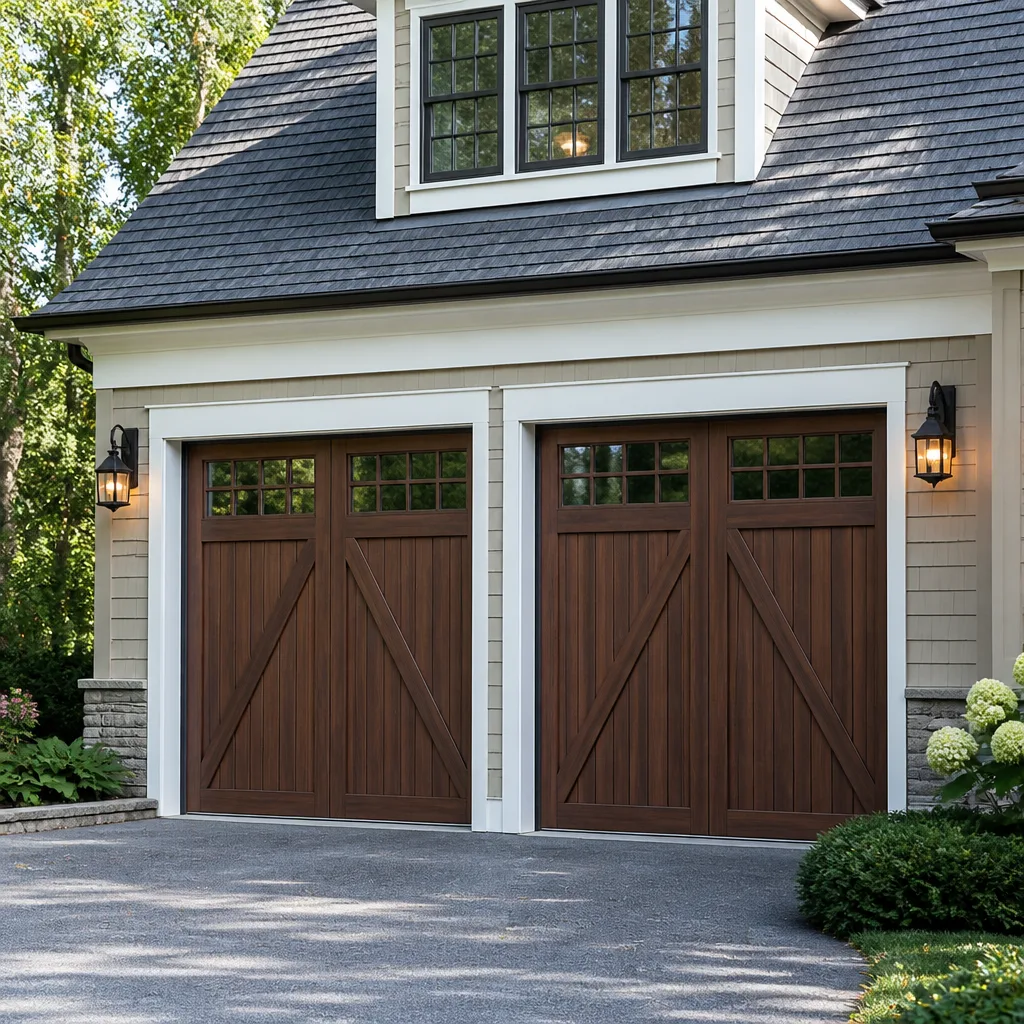 Carriage house
 Modern flush
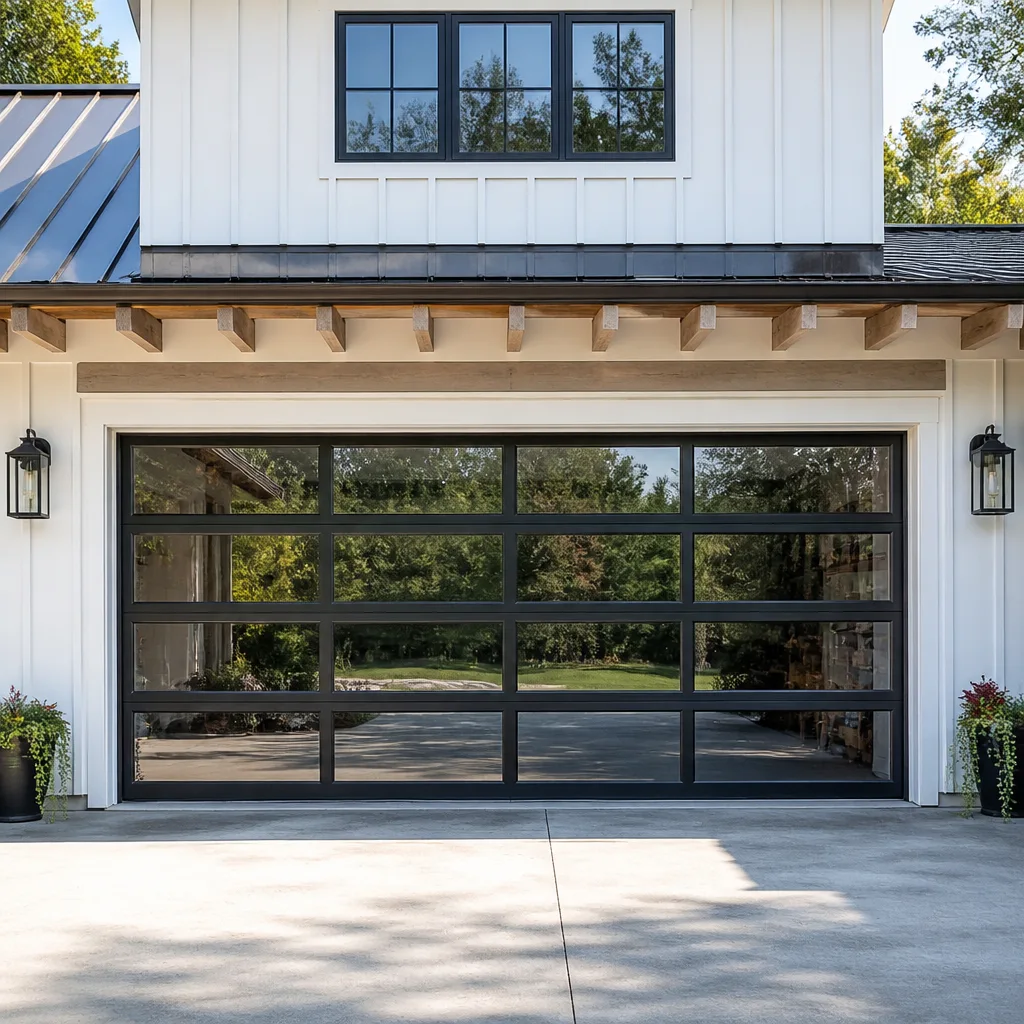 Full-view glass
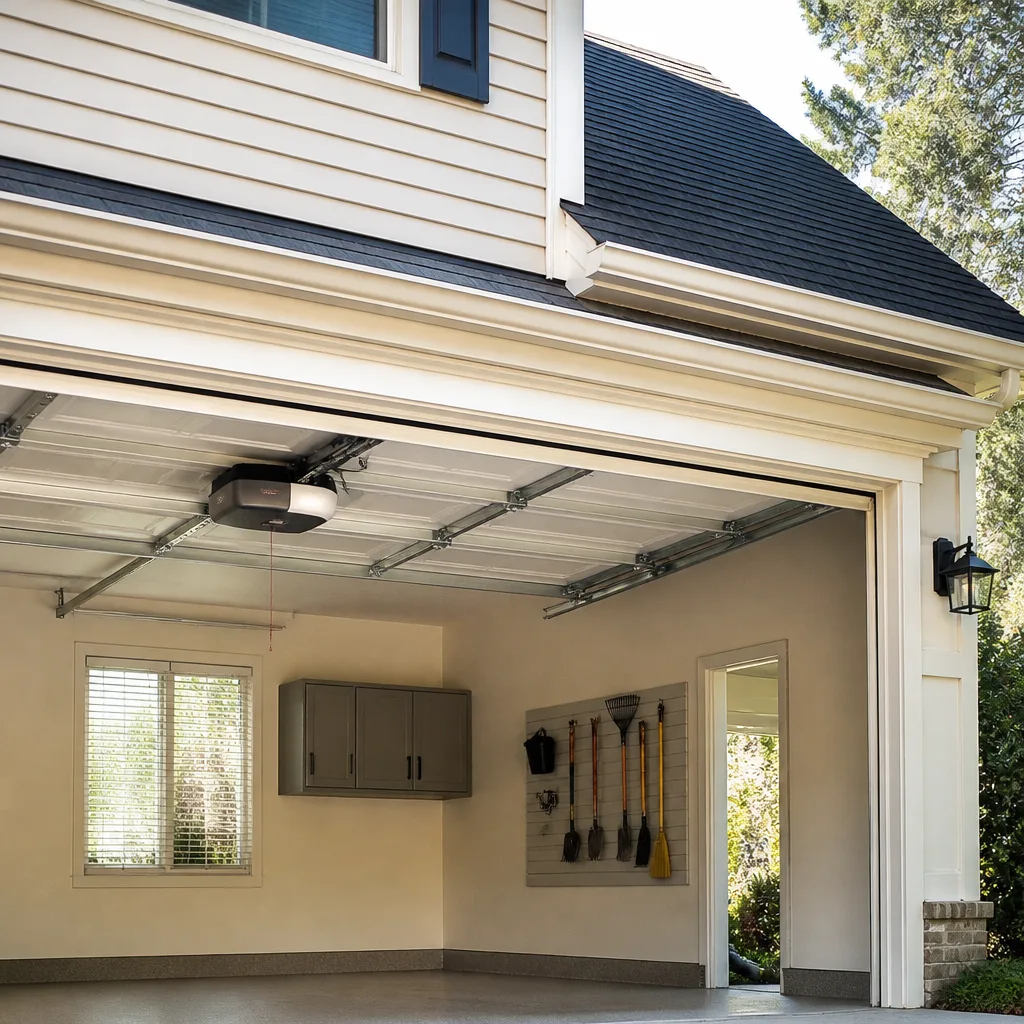 LiftMaster openers
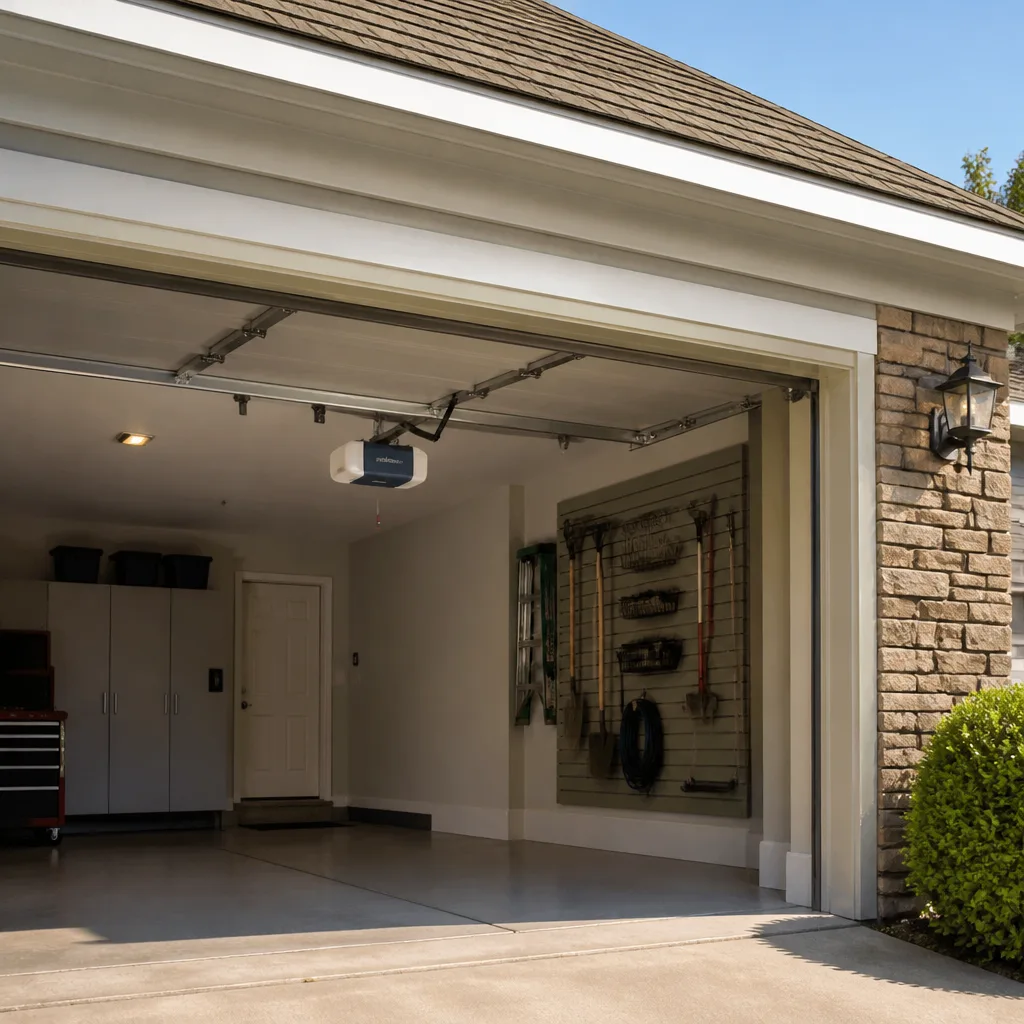 Chamberlain openers
Full 25-point door and opener safety check with every visit - springs, cables, rollers, tracks, and your LiftMaster or Chamberlain opener included
You get a price before we start. It does not change when the pro arrives.
Get your free estimateSeasonal Garage Door Care for Newton: Year-Round Homeowner’s Guide
Most homeowners in Newton treat garage door maintenance as one annual chore, usually a quick visual check in the fall before the cold settles in. That single-checklist approach misses how differently each season loads the system. Our summers run humid enough to swell wood panels and stress opener electronics, our winters drive road salt onto the lowest hardware on the door, and our spring temperature swings can move 40 degrees in a single week. Each season attacks a different part of the door. This guide breaks the year into four separate care protocols plus one component that needs professional eyes on a fixed cycle. Work through it and you’ll catch the small failures before they cascade into the expensive ones.
Quick Answer
Seasonal garage door care in Newton means four distinct protocols: a spring cleaning of salt residue from bottom brackets and rollers, a summer adjustment of opener travel limits as humidity swells wood, a pre-freeze weatherstripping audit in the fall, and a winter switch to cold-rated grease on the moving hardware. On top of those, the torsion spring should get a professional inspection every 12 months regardless of the season. Newton’s temperature swings and road-salt exposure are what make this a four-part schedule instead of one annual pass.
Styles & brands we work with
- Raised-panel steel
- Carriage house
- Modern flush
- Full-view glass
- LiftMaster openers
- Chamberlain openers
Table of Contents
- Spring Protocol: Cleaning Road Salt Off the Hardware
- Summer Protocol: Humidity, Swelling, and Opener Travel Limits
- Fall Protocol: The Pre-Freeze Weatherstripping Audit
- Winter Protocol: Cold Grease and Motor Strain
- The One Component That Needs a 12-Month Inspection
- How Newton’s Climate Stresses a Garage Door System
- Common Mistakes to Avoid
- When to Call a Professional
- Frequently Asked Questions
Spring Protocol: Cleaning Road Salt Off the Hardware
Spring is when Newton garage doors fail at the highest rate, and winter cold is only half the reason. The salt laid down on Newton driveways and side streets all winter doesn’t simply wash away when the snow melts. It migrates. Slush throws it against the bottom section of the door, and it creeps upward along the bracket faces, into the roller stems, and around the hinges. There it sits, crystalline and dry, quietly eating the zinc coating off the hardware for weeks before anyone notices.
Then the first warm stretch arrives. A door that has been contracted at 15 degrees expands in 60-degree heat, and the tension on every fastener goes up. The hardware that survived the cold is now being asked to hold more load while its protective coating has been compromised. That’s the combination that snaps rollers and seizes brackets, not the cold by itself.
Here’s the cleaning protocol that stops the corrosion before that warm-up:
- Mix a spray bottle of warm water with a mild dish detergent. Skip anything abrasive.
- Rinse the full width of the bottom two sections, then the bottom bracket faces and roller stems specifically. These are where the salt collects.
- Work a soft brush into the bracket crevices and the space around each hinge. Salt sits in the gaps that a rag skips.
- Rinse thoroughly with clean water and dry the hardware with a cloth. Letting it air-dry leaves residue behind.
- Apply a light coat of white lithium grease to rollers, hinges, and the torsion bar bearings once everything is dry. Never grease the tracks themselves.
Do this once in early spring, before the first week of warm weather, and again lightly if a late-season snow dump brings fresh salt onto the drive. If you find a bracket that has already pitted or a roller that turns roughly, that’s a repair rather than a maintenance task, and it’s the right time to schedule garage door repair in Newton before the tension climbs further.
Summer Protocol: Humidity, Swelling, and Opener Travel Limits
Wood garage doors absorb moisture from Newton’s humid summer air. It’s not a dramatic process; the panel edges swell by fractions of an inch, and the door grows slightly taller across its width. That’s usually invisible, until the door starts binding at the top corners where the panel meets the jamb. Your opener then starts working harder to pull the door down or push it up, and eventually trips a force-reversal error and refuses to close.
The instinct is to blame the opener. In our experience with wood doors from Clopay, Amarr, and Wayne Dalton, the motor is often fine and the door has simply grown into its own frame. The travel limits are set to a door that had a slightly different dimension back in February.
Here’s how to check for it before the opener starts complaining:
- Open and close the door by hand once a month through July and August. Disconnect the opener first using the release cord. If the door drags, it’s the door, not the motor.
- Look at the top-corner gap on each side. A visible rub mark on the jamb means the panel is binding.
- Listen for a new sound as the door hits the closed position. A thunk instead of a soft stop suggests the travel limit is set short.
Adjusting travel limits is a matter of following your opener’s specific manual; LiftMaster, Chamberlain, Genie, and Craftsman each do it a little differently, and guessing tends to make it worse. If the door is binding visibly, the fix is to relieve the bind, not to force the opener through it. Spraying a silicone-based lubrication on the hinges and bearings in summer, when the door is at its expanded size, buys you some margin. If the opener still trips a reversal, that’s a diagnosis job on the opener electronics, and garage door opener repair in Newton is the call to make before the door decides to stay open on a rainy afternoon.
Fall Protocol: The Pre-Freeze Weatherstripping Audit
The most useful hour you’ll spend on your garage door all year is the fall weatherstripping check, done before the first hard freeze. Seal failures in Newton fail in a specific way: water gets into a crack, freezes overnight, expands, and opens the crack wider. By the time spring arrives, that bottom seal has been through a dozen freeze-thaw cycles and has usually split into sections that no longer close against the floor.
The audit itself is simple:
- Close the door and stand inside with the lights off. Any daylight visible under the bottom edge is a seal gap.
- Run your hand along the bottom seal. Stiff, cracked, or crumbly material has already failed.
- Check the perimeter weatherstripping on both jambs and the top. Look specifically at the corners where the sections join.
- Check the threshold for standing water underneath the door after a heavy rain.
When you replace the bottom seal, material choice matters here. Rubber seals stay flexible through the freeze-thaw cycles that Newton gets from November through March. Basic foam seals compress and set at the first hard freeze and never fully recover, so the gap returns every year. Silicone-based seals sit between those two; they hold up well, and they’re the more durable option against rubber for our wet freeze conditions. If you’re replacing the seal anyway, a silicone bulb seal plus a rubber blade on the threshold is the combination that survives a full Newton winter.
While you’re checking the seal, do the same pass on the hinges and the bottom bracket. Any hardware that has been wet through the summer is a candidate for corrosion you won’t see until the spring warm-up.
Winter Protocol: Cold Grease and Motor Strain
Standard white lithium grease is the default for garage door hardware, and it’s fine for most of the year. In a Newton January, it isn’t. The grease thickens below about 20 degrees Fahrenheit, and the colder it gets, the more resistance the rollers and hinges create. The opener motor can’t tell the difference between a stiff door and a heavier one; it just senses more resistance and pulls more current to compensate.
That current draw is what wears an opener prematurely. It also triggers force-reversal, the safety feature that opens the door back up when it senses an obstruction. So a cold snap in January produces a specific failure pattern: the door starts stopping and reversing halfway down, or the opener’s overload protection shuts it off mid-travel. The motor is fine. The grease is the problem.
The winter protocol:
- In late fall, before the first hard freeze, wipe the existing grease off the rollers, hinges, and torsion bar bearings with a rag.
- Reapply with a cold-rated or synthetic grease specified for cold conditions. Confirmed availability varies by product, so check the tub for a low-temperature rating.
- Spray the rubber seal with a silicone-based protectant so it doesn’t bond to the floor on a cold morning. A door that rips its seal free on opening is a door that will leak all winter.
- Hand-cycle the door once a week through the coldest months to check that it isn’t stiffening. It’s a two-minute job.
If the opener stops responding mid-cycle in the cold, the first thing to check is whether the door itself moves freely by hand after disconnecting it. That tells you whether you’re looking at a door problem or an opener problem. Both are fixable, and neither will resolve itself by waiting for warmer weather.
The One Component That Needs a 12-Month Inspection
The torsion spring is the single component we recommend having inspected professionally on a fixed 12-month cycle, regardless of what the other seasonal checks show. It’s the part of the system that carries the door’s weight, and it’s the part that fails without warning. Other components wear visibly; a spring can lose its coating, corrode in a spot you can’t see from the floor, and still look intact right up until it fails.
Newton’s spring and fall temperature swings are exactly what stresses a spring. The door expands and contracts across a 40-degree week; the spring cycles from relaxed to loaded and back again every time the door opens, and the total number of cycles is what eventually exhausts the spring’s useful life. There’s no seasonal window where the spring is more or less safe; its condition is cumulative, and the check should be on a calendar, not a season.
We have to flag the safety point here clearly. Torsion springs are under enormous tension, and the repair requires specific tooling and specific knowledge of how to release and re-tension the system safely. A torsion spring failure can cause serious injury. This is not a component to adjust, measure, or “test” yourself. The inspection we recommend is to have a trained technician look at it and tell you its condition. The spring repair service we connect Newton homeowners with is the same category of work – trained handling of high-tension torsion and extension spring systems, which is why it’s called out as a standalone specialty rather than folded into general repair.
If you’re hearing a new sound from the door – a metallic ping on the last few inches of travel, or a grinding that wasn’t there last month – don’t wait for the annual check. That’s the time to call garage door spring repair in Newton and have a technician look at it. A spring that’s starting to fail is much easier to deal with than one that’s already gone.
How Newton’s Climate Stresses a Garage Door System
Newton’s climate is not extreme in any single direction, but it’s hard on garage doors because of how much it moves. The relevant pattern is not one brutal season; it’s four distinct stress regimes applied in rotation, each one working on a different part of the system.
Summer delivers humidity, and humidity works on anything wood or organic. Panel edges swell, seals soften, and the door’s overall dimensions drift. Once the door starts binding at the top corners, the opener’s force-reversal adjustment is the next thing to drift, and the two together produce intermittent faults that are hard to diagnose after the fact.
Winter delivers cold and salt, and they work together. Cold thickens grease and stiffens rubber; salt compromises the protective coating on the lowest hardware on the door. Neither of those produces an immediate failure. Both of them weaken the hardware so that the spring warm-up finds it unprepared.
Spring and fall deliver the temperature swings. A 40-degree week is common in Newton in March and again in late October. Each of those shifts changes the tension on every fastener and the effective length of every panel, which is why the two shoulder seasons are when we recommend the two most thorough hands-on inspections of the year.
Driveway salt exposure is largely a function of where you park. A door that faces a heavily treated side street takes more salt than one set back from the road, and that difference is worth factoring into how often you run the spring cleaning protocol. If your drive gets plowed and salted regularly, a second cleaning pass a few weeks after the first isn’t overkill.
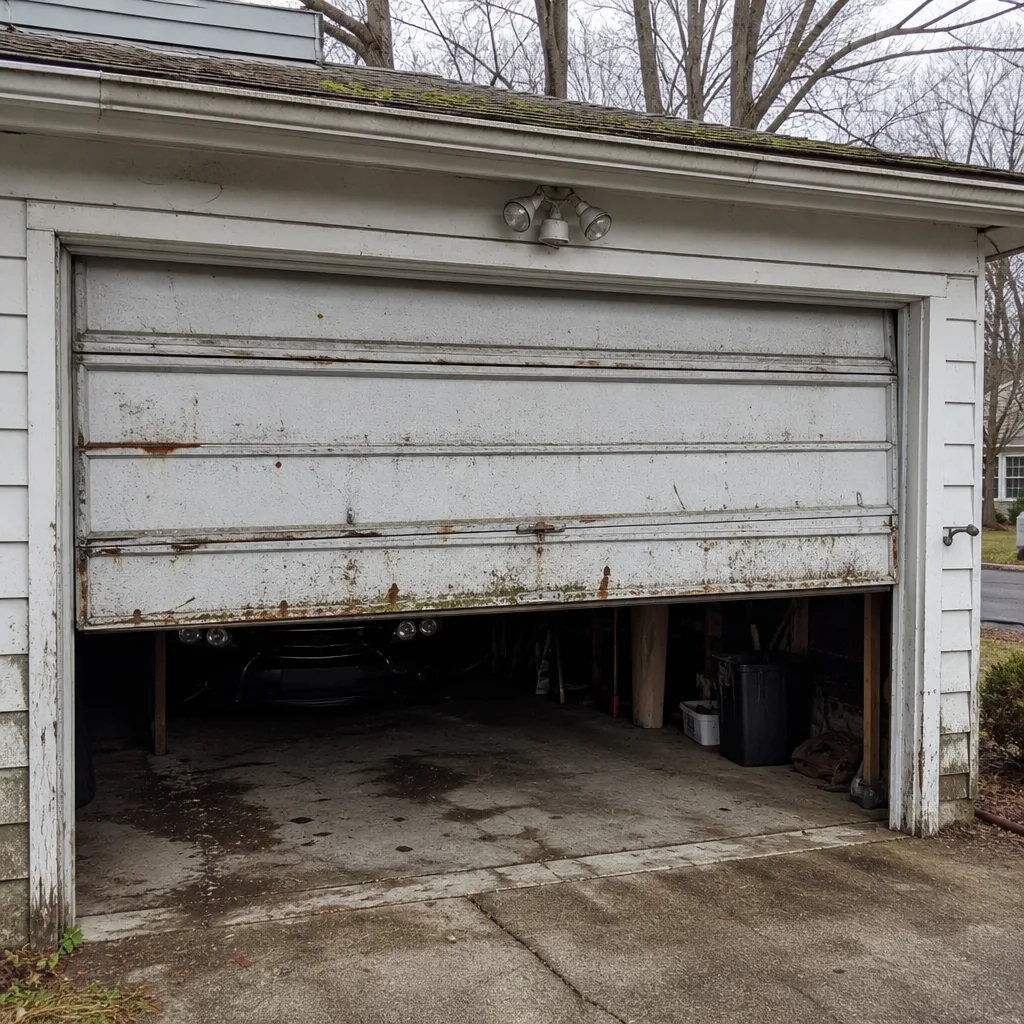
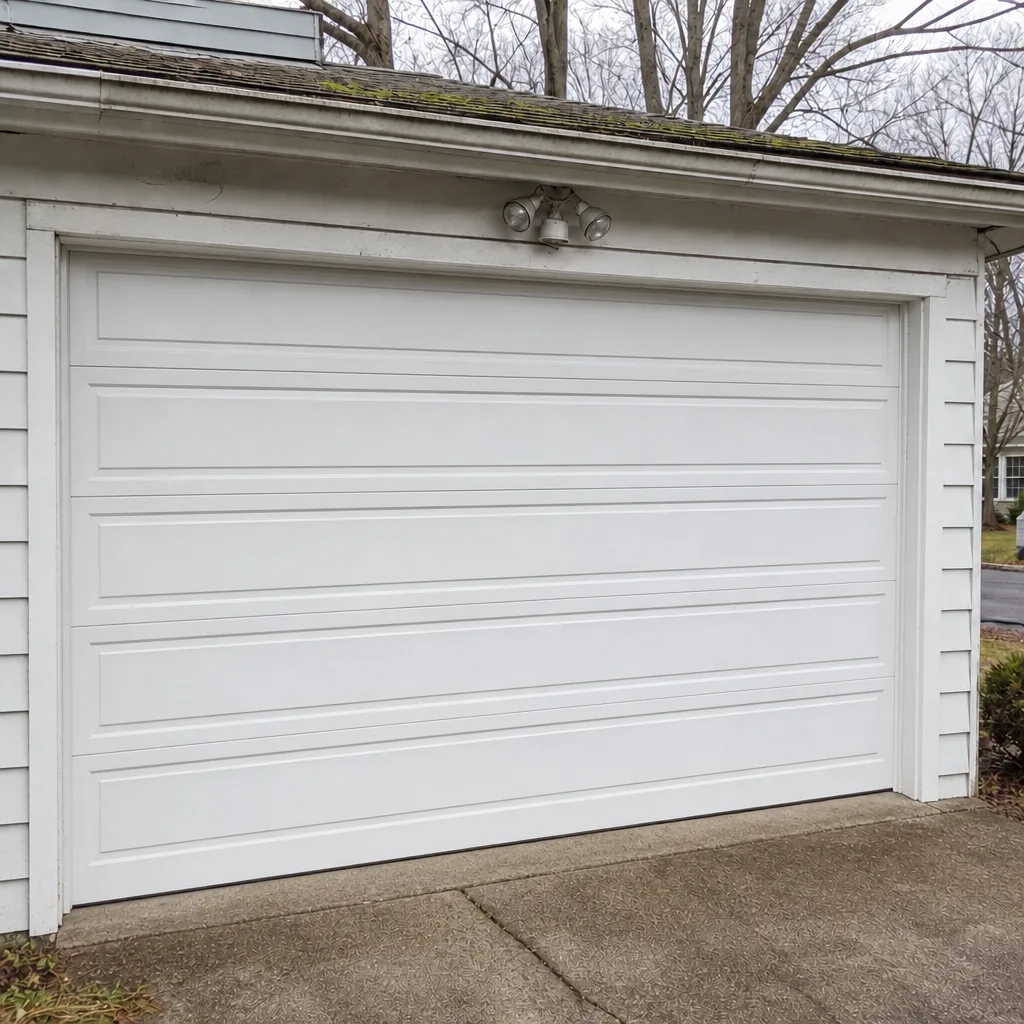
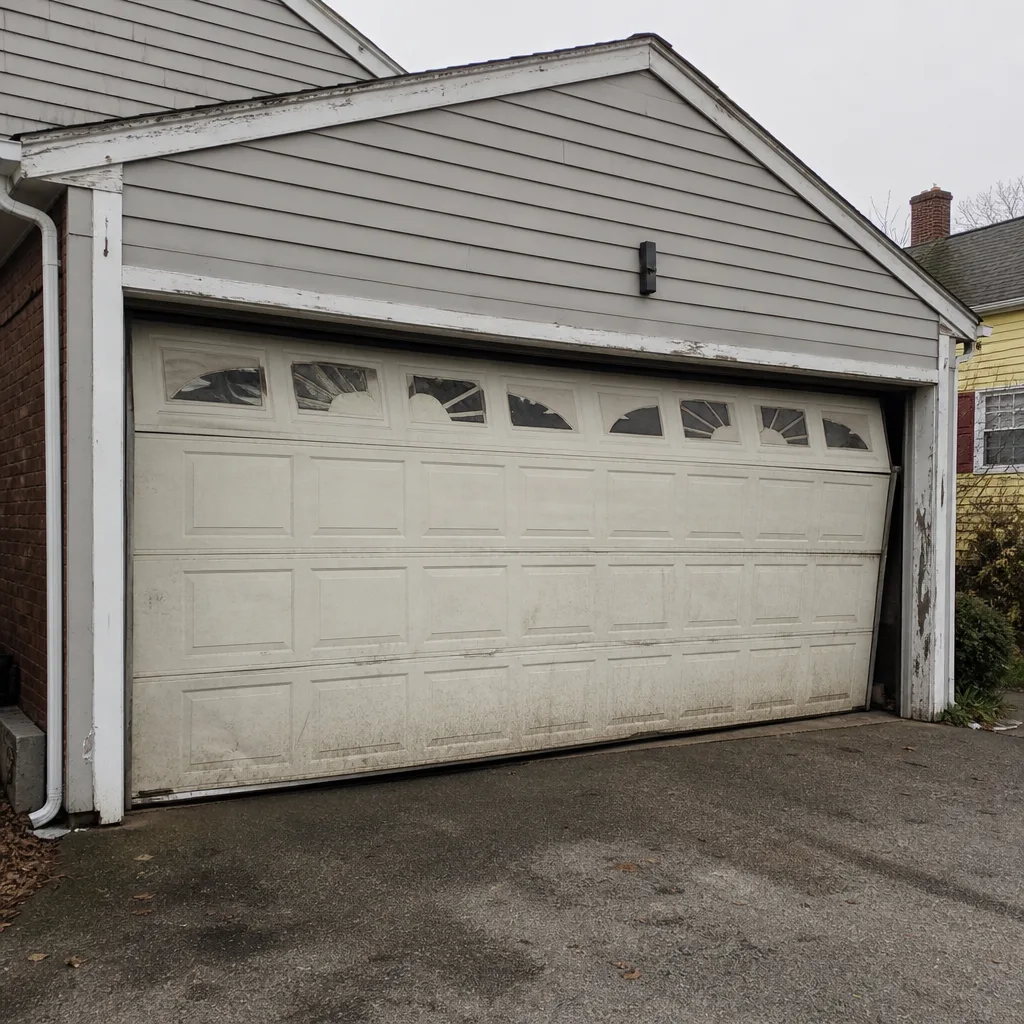
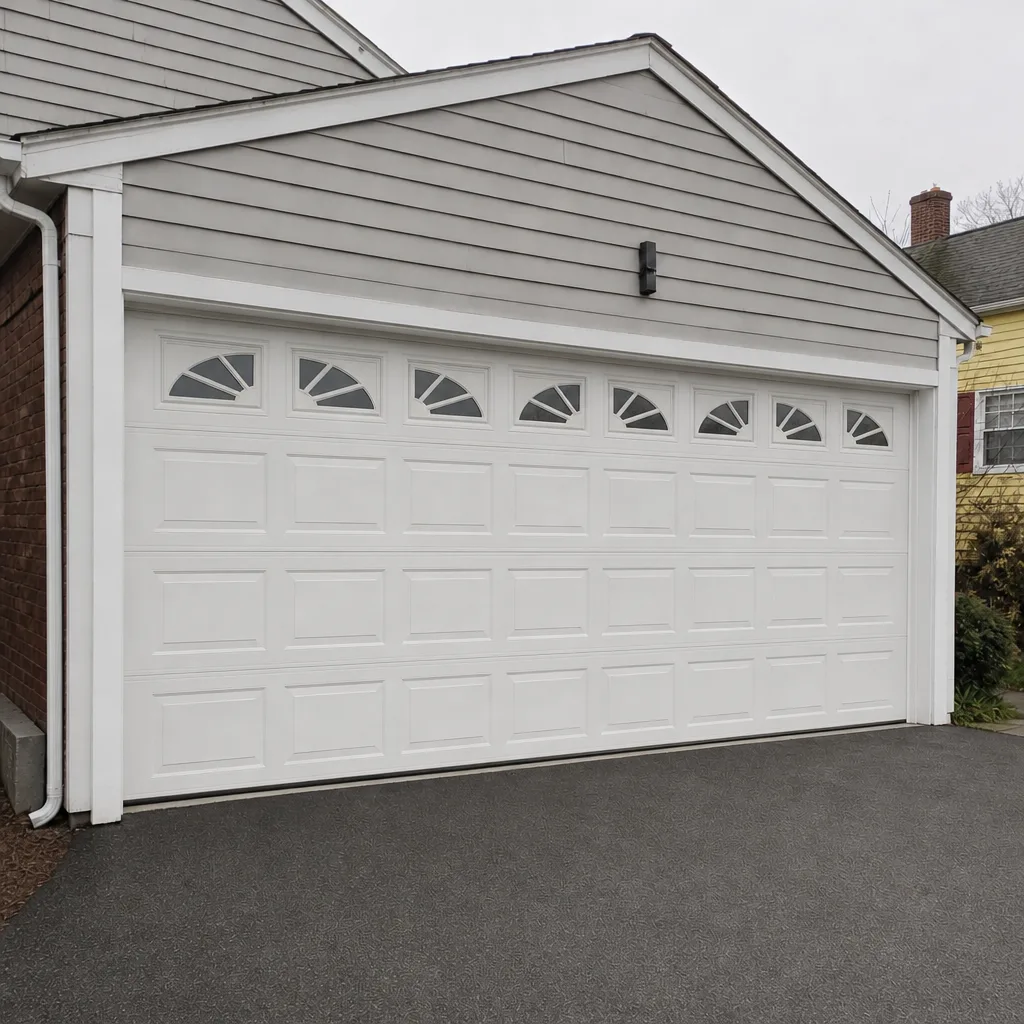
See the difference
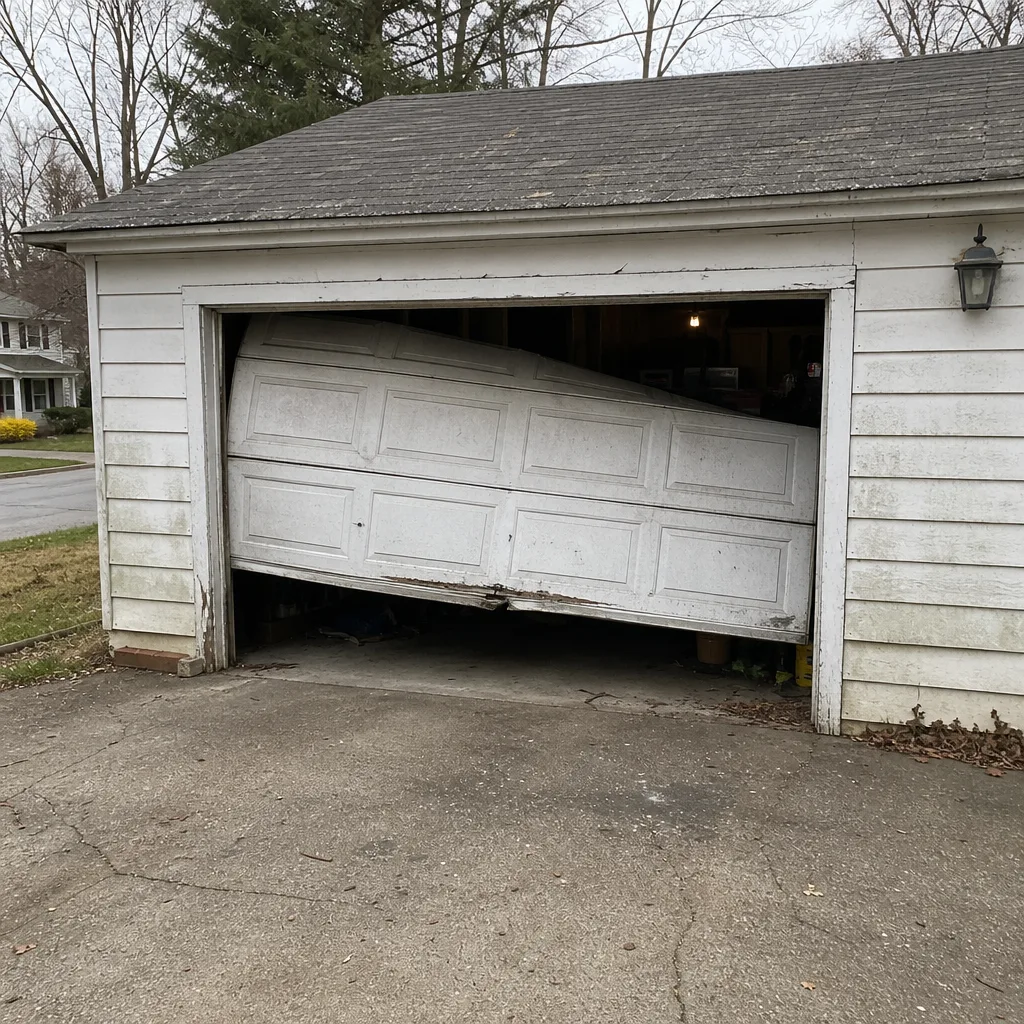 Before
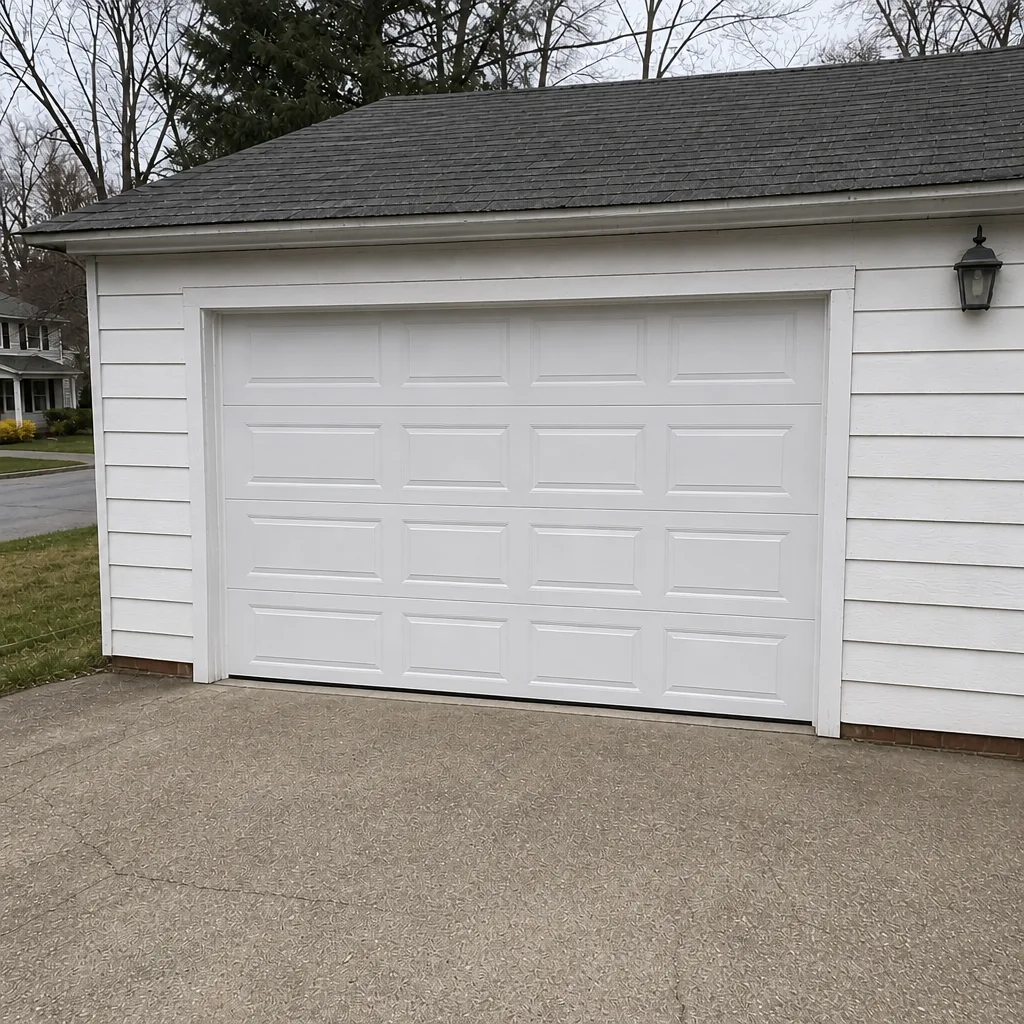 After
 Before
 After
 Before
 After
Common Mistakes to Avoid
- Applying grease to the tracks. Tracks should be dry and clean. Grease in the tracks attracts debris that jams the rollers and causes the door to wobble. Wipe the tracks with a dry cloth, never a greased one.
- Skipping the salt rinse because the door “looks fine.” Salt corrosion works under the coating, so the door looks normal right up until the hardware gives out. The rinse is preventive, and the surface appearance tells you nothing.
- Turning up the opener force setting to get past a stiff door. The force setting is a safety limit. Raising it to force a binding door through its cycle defeats the protection and puts more load on the motor. Fix the bind instead.
- Replacing the bottom seal with a foam product. Foam compresses at the first Newton freeze and stays compressed. You’ll be replacing it again next fall.
- Adjusting the travel limits without checking the door by hand first. If the door is binding at the top corners, a travel-limit adjustment just moves the problem. Disconnect the opener and test the door by hand before touching the limits.
- Waiting for a spring to break before having it inspected. The 12-month inspection is there precisely because springs don’t warn you. Scheduling it is cheaper and safer than scheduling the repair.
- Assuming one brand’s instructions apply to your opener. LiftMaster, Chamberlain, Genie, and Craftsman openers each set and adjust travel limits and force settings differently. Follow the specific manual for your unit, or have a technician check it.
When to Call a Professional
Some seasonal care belongs in your hands: the salt rinse, the seal audit, the grease change, the monthly hand-cycle. Other situations call for a trained technician the same day. If you hear a ping from the torsion spring, if the door reverses unexpectedly more than once, if a cable is visibly slack or frayed, or if the door is stuck off-track or won’t close, that’s the point to stop hand-testing and call.
Newton Garage Door Repair Pros offers free estimates in Newton – call (855) 337-1889. We work on residential doors and openers from eight major brands, including Amarr, Wayne Dalton, Craftsman, and Raynor, and we handle both repair and full installation. Our technicians have up to 8 years of experience, and the price is quoted and agreed before any work starts. For a stuck door or a locked-out situation, emergency garage door service is available; for installations or replacements, we’ll set up a free measure and give you a written price.
Frequently Asked Questions
You should do a hands-on check once each season and have the torsion spring professionally inspected every 12 months. The four seasonal protocols in this guide cover salt cleaning in spring, humidity and travel-limit checks in summer, the weatherstripping audit in fall, and the grease change in winter. The annual spring inspection is separate from those because a spring’s condition is cumulative and doesn’t reset with the seasons. Call (855) 337-1889 for a free estimate on any repair the seasonal checks turn up.
Cold grease thickening on the rollers and hinges is the most common reason a Newton garage door reverses in winter. The extra resistance trips the opener’s force-reversal safety feature, which opens the door back up rather than closing it. Switching to a cold-rated grease before the first hard freeze usually solves it. If the door moves freely by hand and the opener still reverses, the opener needs diagnosis instead. Call (855) 337-1889 to schedule a free estimate.
Yes. Road salt migrates from the driveway onto the bottom brackets and rollers and corrodes the protective coating on that hardware over the winter. The corrosion is invisible until the spring warm-up puts extra tension on the door, and that’s when compromised hardware tends to fail. A thorough warm-water rinse of the bottom two sections and the bottom brackets, followed by drying and a light lithium grease application, stops the damage before it starts.
Replace it before winter, ideally in the fall during the weatherstripping audit. A seal that’s cracked or stiff going into the freeze won’t recover; water gets into the crack, freezes, and widens it through the winter. A silicone or rubber seal installed in the fall holds through the freeze-thaw cycles that Newton gets all season. Foam seals compress and set at the first hard freeze, so they’re a poor choice for this climate.
You shouldn’t. A torsion spring is under enormous tension, and the repair is one of the most dangerous jobs in the trade. You can’t tell a spring’s condition by looking at it from the floor, and any attempt to test or adjust it carries a real risk of serious injury. Have a trained technician inspect it on the 12-month cycle. Our technicians have up to 8 years of experience with high-tension spring systems. Call (855) 337-1889 for a free estimate.
Spring repair is quoted per job based on the spring and the door system, and you’ll get a written price before any work starts. A matched pair of springs is usually replaced together, so a paired repair reflects that. The written estimate is the final price for the agreed scope; if the technician finds an additional problem, you’ll get a separate quote before that work proceeds. No surprise invoice. Call (855) 337-1889 for a free estimate – same-day service is available for a failed spring.
The Bottom Line
Treat seasonal garage door care in Newton as four separate protocols rather than one annual pass, and you’ll catch the small failures before they become expensive repairs. Spring is about washing salt off the bottom hardware and greasing what’s exposed. Summer is about watching for wood swelling and binder at the top corners before the opener starts reversing. Fall is the weatherstripping audit and the cold-grease change, both done before the first hard freeze. Winter is the weekly hand-cycle and attention to any change in sound. On top of all four, the torsion spring goes to a trained technician once a year. That’s the whole schedule, and it’s the difference between a door that lasts and a door that snaps in March. When you need a hand, you can reach us at (855) 337-1889 or start with Newton Garage Door Repair Pros.
Written by the team at Newton Garage Door Repair Pros.