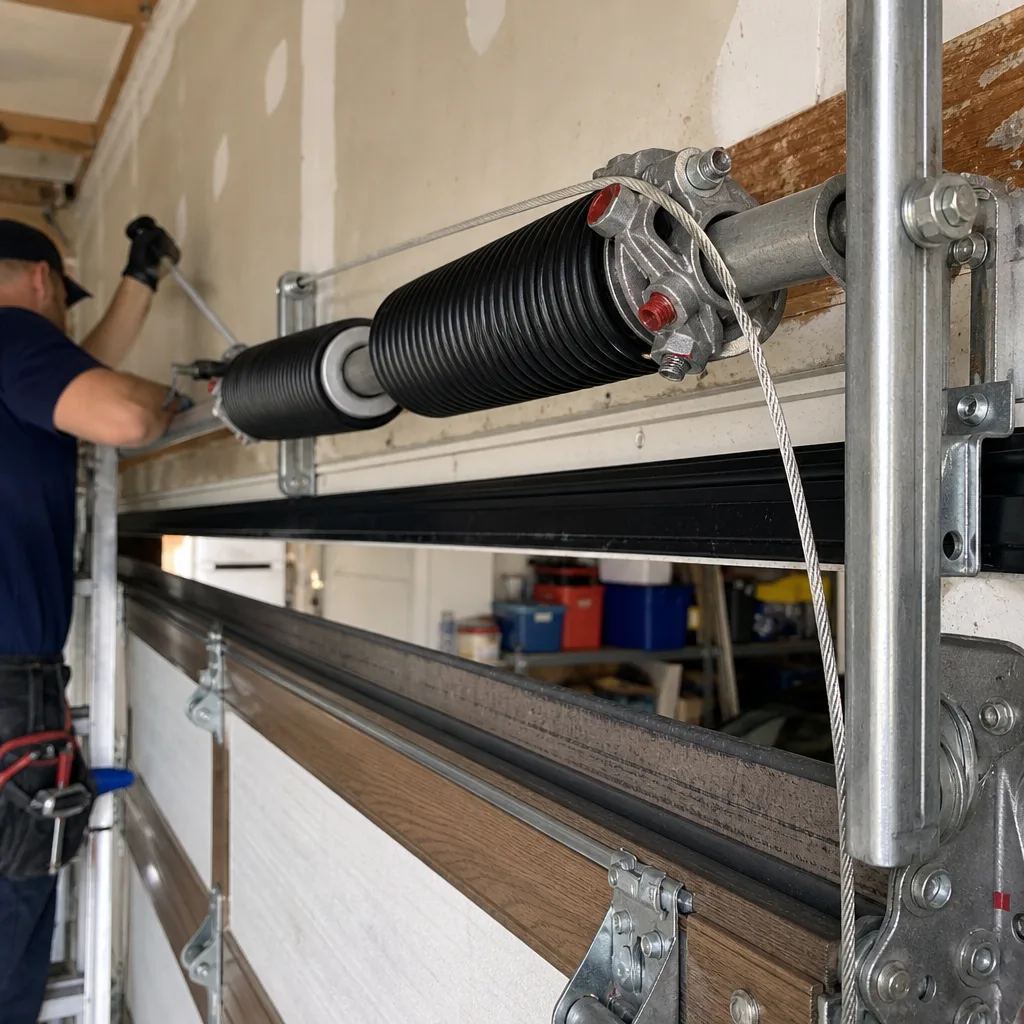
Last updated November 22, 2026
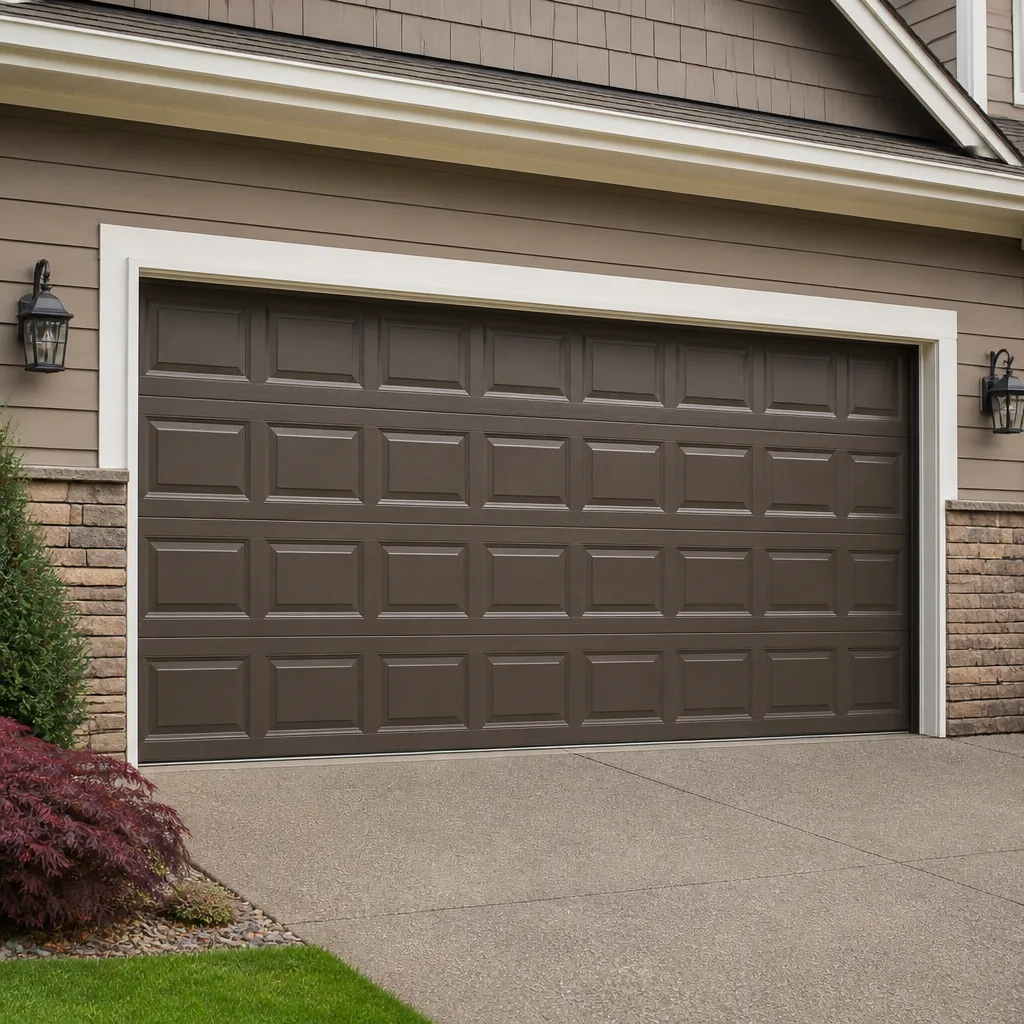 Raised-panel steel
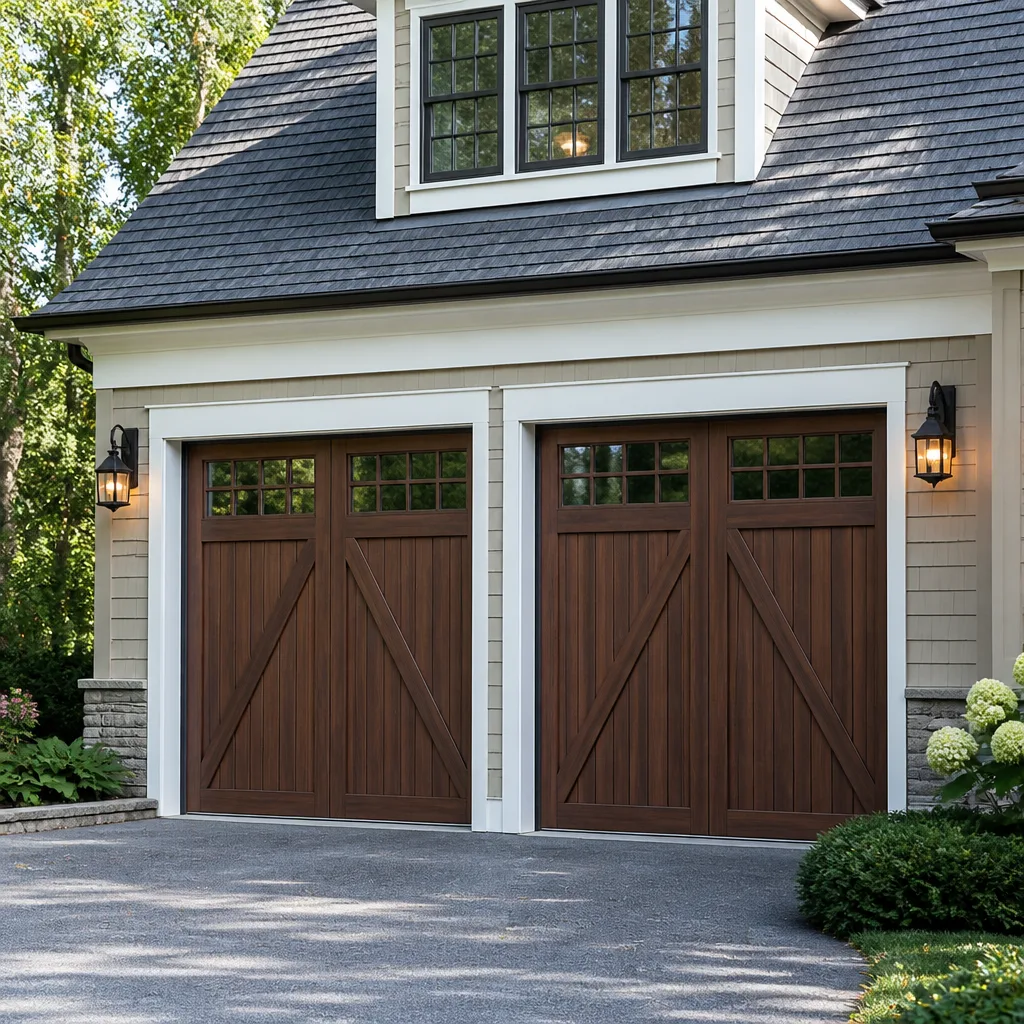 Carriage house
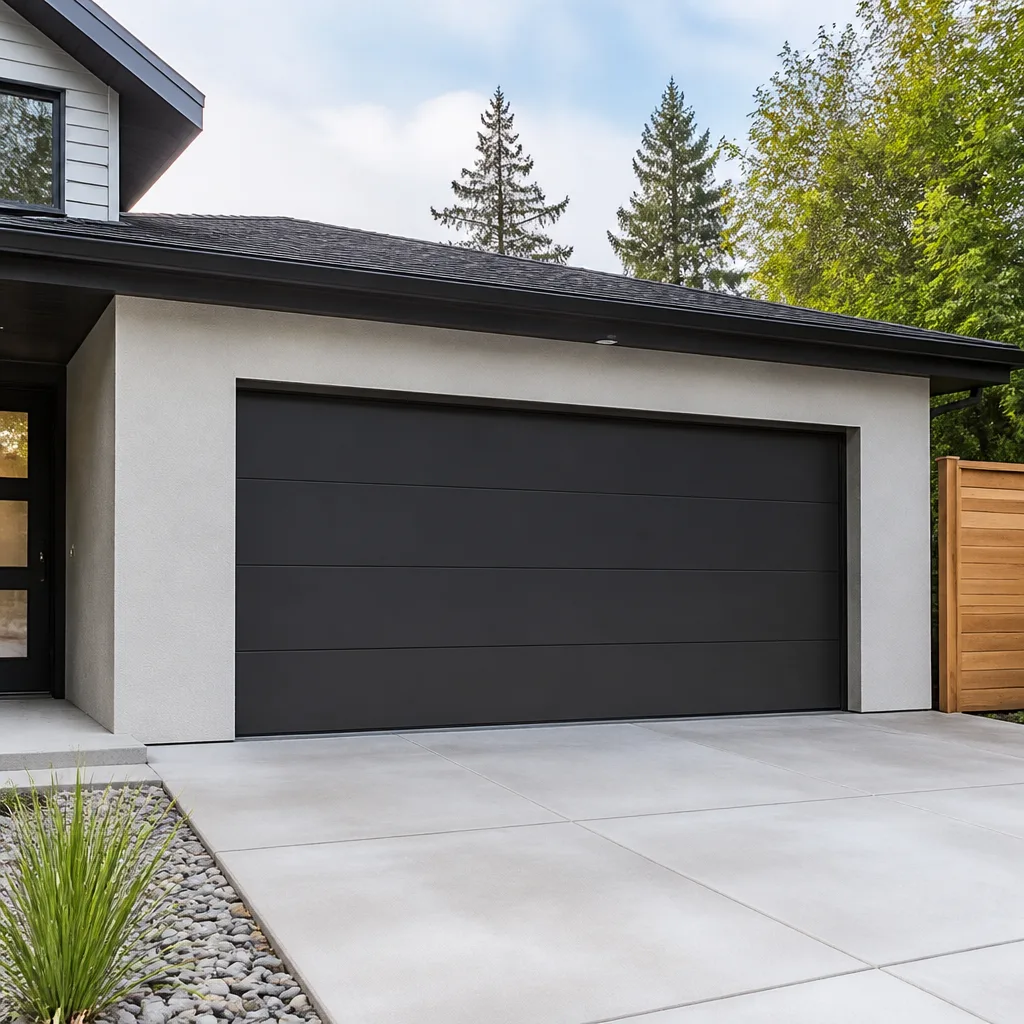 Modern flush
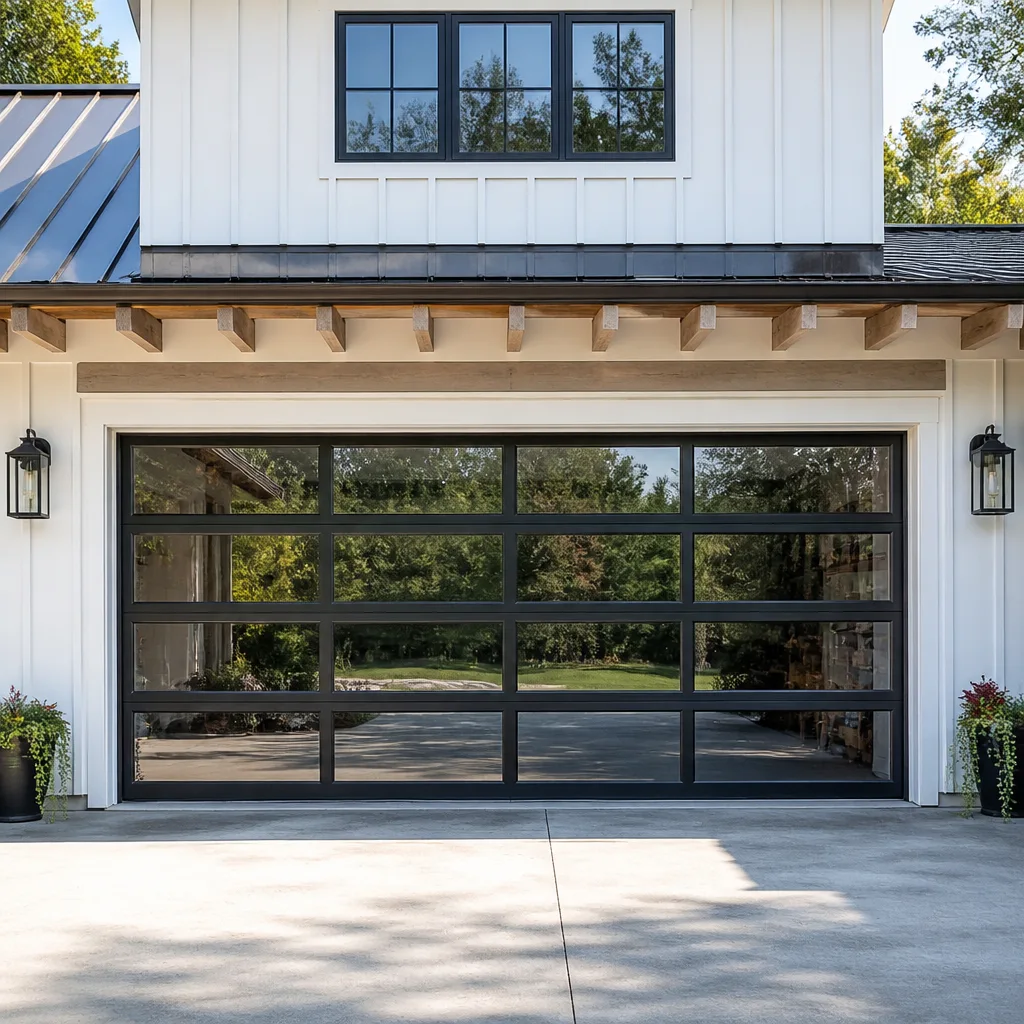 Full-view glass
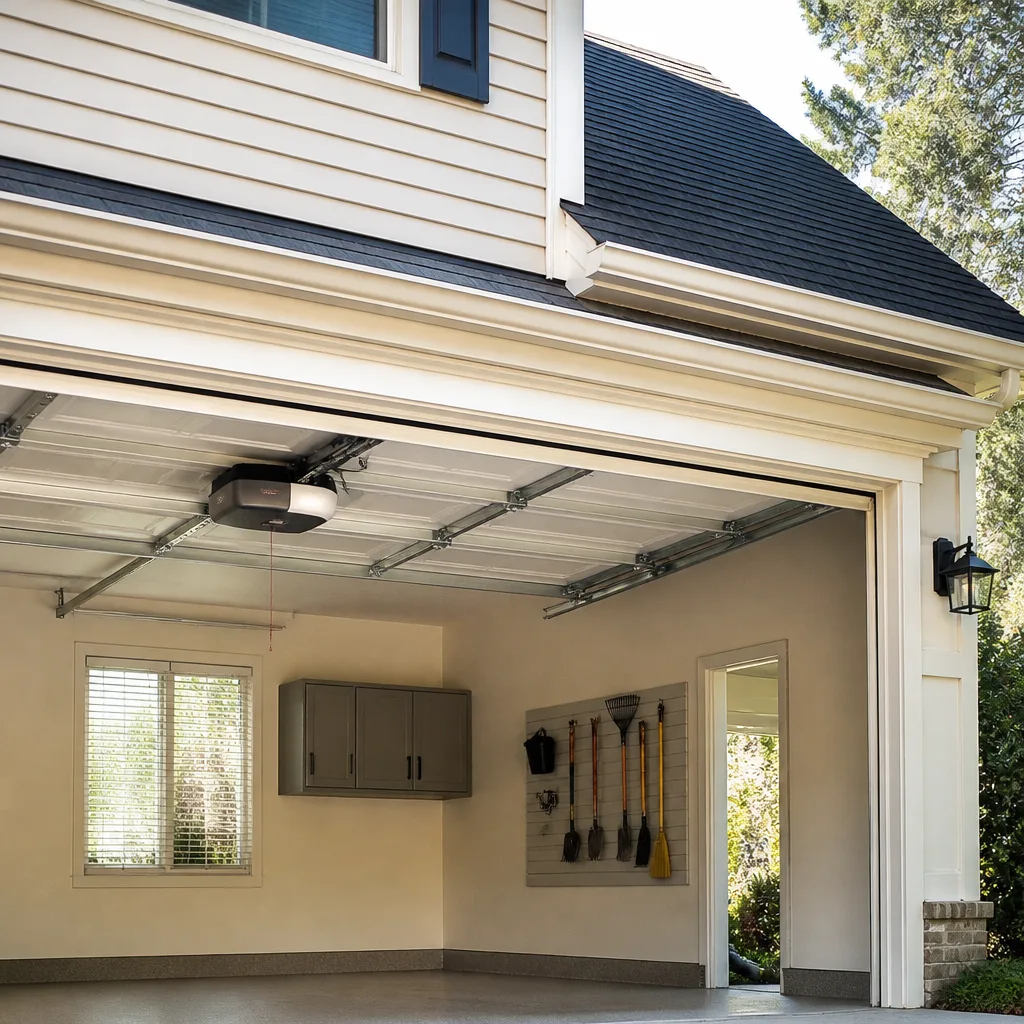 LiftMaster openers
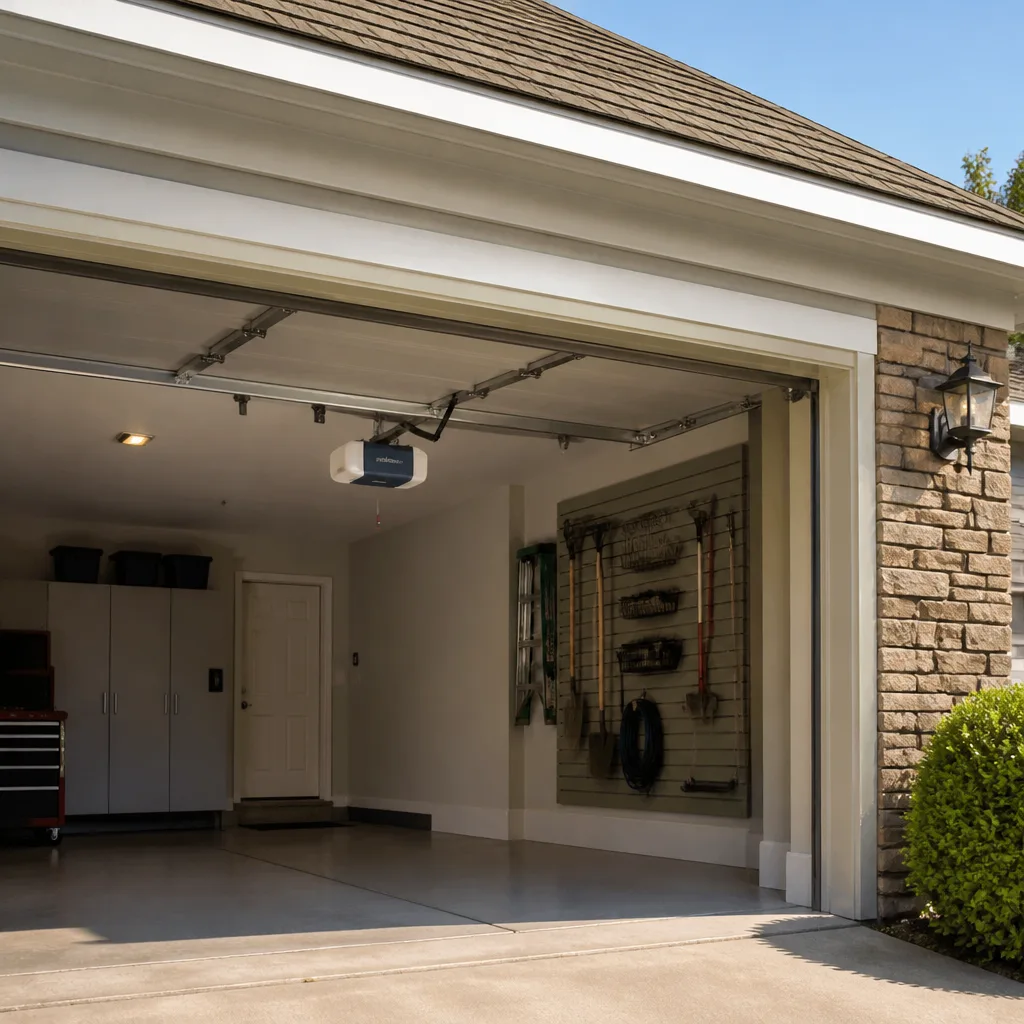 Chamberlain openers
Full 25-point door and opener safety check with every visit - springs, cables, rollers, tracks, and your LiftMaster or Chamberlain opener included
You get a price before we start. It does not change when the pro arrives.
Get your free estimateGarage Door Repair Maintenance Checklist for Newton Homeowners
The most common emergency garage door call in Newton happens in January, and it rarely starts with a dramatic snap. More often, a small lubrication problem that began in October has quietly turned into a roller seized in its track by the time the first hard freeze settles in. By then the opener is straining against a door that no longer wants to move, and a five-dollar fix has become a service call.
Generic checklists miss this because they ignore how New England weather drives garage door failure on a schedule. This guide is built the other way around: what actually breaks on Newton doors, and when. You’ll learn which checks belong in October, which belong in April, and how to look at your springs and weather seal without putting your hands anywhere dangerous.
Quick Answer
A garage door in Newton needs roughly two focused maintenance passes a year: one in October before freeze season, covering lubrication, weather seals, and a visual spring inspection, and one in April after road salt exposure ends, covering tracks, hardware, and safety reversal. Between those, test the opener’s force limit and balance once a season and after any stretch of extreme temperature swings. Anything involving the torsion springs, cables, or a door that’s come off its tracks should go to a trained technician, not a homeowner.
Styles & brands we work with
- Raised-panel steel
- Carriage house
- Modern flush
- Full-view glass
- LiftMaster openers
- Chamberlain openers
Table of Contents
- Why Newton Garage Doors Fail on a Seasonal Schedule
- The October Checklist: Before Freeze Season
- Inspecting Springs Without Touching Them
- Choosing the Right Lubricant for Newton Winters
- Weather Seals and Heaving Concrete Slabs
- Testing the Opener Force Limit
- The April Checklist: After Road Salt
- The Five-Minute Monthly Walk-Around
Why Newton Garage Doors Fail on a Seasonal Schedule
A garage door is a machine made mostly of steel, and steel moves with temperature. In Newton, that expansion and contraction runs through a much wider range than in most of the country, and the parts that suffer most are the ones buried in friction and heavy load: rollers, hinges, the torsion spring, and the bottom seal resting on a concrete slab. Understanding that cycle is the whole basis of this checklist.
Through a Newton summer, the door and its hardware sit warm and expanded. Grease on hinges and rollers softens and migrates. By the time the first cold snap arrives, that softened lubricant has often thinned enough to leave a roller or hinge running nearly dry. Cold then does the rest: metal contracts, clearances tighten, and the tacky residue left behind gets stiff and gummy. A roller that rolled freely in September can bind against the track by December.
The other seasonal lever is the concrete. A garage slab in Newton goes through repeated freezing and thawing cycles each winter. Water in fine cracks along the apron and near the door threshold freezes overnight, expands, and lifts slightly by morning. Over a season, a slab can heave just enough that the bottom seal no longer sits flush, opening a small gap that lets cold air and water move in and out under the door.
And then there’s the road salt. From the first treated street through the last spring rain, salt and its residue get tracked into your garage on tires and boots. It settles on the bottom seal, the bottom bracket, the hinges, and the lower door panels. Salt doesn’t just look ugly; it holds moisture against the steel and keeps the lower third of the door wet far longer than the upper panels ever are. That’s why the bottom section of a Newton door aged through several winters usually shows its wear before anything higher up does.
Put those three together: winter lubrication failures, seasonal slab movement, and salt exposure. That’s the failure map this guide follows. If you’d rather skip the DIY troubleshooting piece, our Newton Garage Door Repair Pros team handles the same inspection with eyes that have seen it repeat every season.
The October Checklist: Before Freeze Season
October is the one month where a little work on a garage door in Newton pays off more than any other. The goal is to get moving parts clean and properly lubricated and to catch small problems while the weather still lets you work with the door open in comfort. Here’s the sequence we recommend:
- Clean the tracks. Use a dry rag or a soft brush along the inside of each vertical and horizontal track. Don’t use solvent or washing-up liquid, which leaves residue that attracts grit. Wipe out any old clumped grease you find.
- Lubricate rollers, hinges, and the torsion spring’s bearing points. A light coat on each roller stem and each hinge pivot is all it takes. Avoid the flat inside surface of the track itself, where lubricant collects dust and clogs the rollers.
- Look at the bottom seal. With the door closed, check for daylight at the corners and along the threshold, and for cracks or flattening in the rubber.
- Check the balance. Pull the opener’s release handle so the door is on manual, lift it halfway, and let go. It should hold roughly where you stopped it. If it drops or rises on its own, the spring tension or the door’s balance needs attention from a technician.
- Do the spring visual check below. Eyes only, hands off.
- Test the opener’s force limit and safety reversal. Steps are in a later section.
- Tighten loose hinge and bracket bolts. A nut driver and a socket set are enough. Don’t overtighten hinge bolts on the door face; let the hinge move.
- Clear the photo-eye path at the bottom corners. Wipe both lenses and confirm the LED is steady, not blinking.
If October is already behind you and something on that list got skipped, that’s normal. The winter versions of these failures tend to show up as complaints: a door that groans on the way down, a bottom seal that frosts over, an opener that seems to be working harder than it used to. All of those are downstream of this list. If you want a professional opinion before the cold sets in, our garage door repair service includes a full inspection, and the price is quoted and agreed before any work starts.
Inspecting Springs Without Touching Them
Here’s the most important safety point in this entire guide: torsion springs and their cables are under extreme tension, and they can injure or kill someone who handles them without the right tools and training. Never adjust, wind, unwind, or touch a torsion spring or its cable. The only inspection a homeowner should ever do on a spring is a visual one, with hands in pockets. Spring repair is a job for a trained technician, and it’s why we list garage door spring repair as its own specialty rather than bundling it into general repairs.
What you can safely check is simple and useful. Look up at the horizontal bar above the door, where the spring is wound. There are two clear signs of wear to look for:
- The gap test. On most torsion springs, the coil is wound tightly with a small uniform gap between adjacent coils. Run your eye along the length of the spring. If you see a wide gap opening up, especially one noticeably larger than the others, the spring has begun to fatigue and is on its way out. Two coils that were touching in spring and are now visibly separated is the warning sign.
- Coil deformation. Look for a spring that bows slightly in the middle, looks stretched, or has a coil that sits at a visibly odd angle to the rest. On a pair of springs, compare one side to the other. If they no longer look symmetrical, one has lost tension.
- Cable condition. Look at the steel cables running along each side of the door. Fraying, kinks, or a cable sitting loosely off its drum are all signs it needs inspection by a technician. Never try to hook a slipped cable back on.
If you see any of these signs, stop operating the door and arrange service. Because a matched pair of springs is usually replaced together, our technicians replace them as a pair, and the written quote covers both.
Choosing the Right Lubricant for Newton Winters
Standard spray lubricants, including ordinary WD-40, are a poor choice for garage door hardware in Newton. Here’s why: the base of a general-purpose spray is thin, it flashes off quickly, and what’s left behind is either nothing at all or a thin gummy film that turns tacky in cold weather. Below roughly 20°F, that film stiffens, and a roller that depends on it for smooth movement seizes up instead. The result is exactly the January problem we described at the top of this guide: not a part that broke, but a part that stopped moving.
The right product is a purpose-made garage door lubricant. For Newton winters we recommend one of these:
- White lithium grease in an aerosol or tube. It stays put, resists water, and stays soft enough at Newton winter temperatures to keep rollers and hinge pivots moving.
- Silicone spray. A good option on weather seals and on the door’s bottom rubber, where you want a non-staining, non-gumming film that repels water and won’t attract grit. It’s less durable on heavy metal-to-metal contact than lithium grease.
- Specific garage door lubricant labeled for cold weather. These products are formulated to hold up across a wide temperature range, which is exactly the requirement in a Newton winter.
Where to apply it: hinges at every pivot point, the roller stems (not the flat track surface), the torsion spring’s bearing points and the top of the center bearing plate, and the opener’s rail and chain or belt if it’s a belt or chain drive system. Use a light coat, not a soaking, and wipe off any excess. Too much grease collects grit and grit wears the moving parts faster than dry metal does. Where to avoid it: the inside of the track, the photo-eye lenses, and the seam of the bottom seal, where a wet film will trap dust and salt.
Our technicians have up to 8 years of experience with the drive systems on LiftMaster, Chamberlain, Genie, and Craftsman openers, so we can also point you to the right products and settings for your specific opener when we’re on site.
Weather Seals and Heaving Concrete Slabs
The bottom seal on your garage door and the concrete apron under it form one unit, and in Newton both move every winter. A slab that heaves seasonally can lift a fraction of an inch at one corner, and the rubber seal you checked in October may no longer sit flush by February. That gap is small but it matters: it’s a path for cold air, snowmelt, and road salt to get under the door and onto the bottom panel and bracket.
Check the seal with these steps:
- Close the door fully and look along the threshold from a standing position. If you can see a thin line of daylight at either corner or anywhere in the middle, the seal has lost contact with the slab.
- Inspect the rubber for cracks, tearing, or a flattened and hardened profile. Rubber that no longer springs back has aged out; replacement is the right move.
- Look for water stains, salt residue, or a rusty streak on the bottom panel of the door. Those are the marks left by a gap letting moisture reach the steel.
- Look at the slab itself. Hairline cracks radiating from the apron near the door are common in New England and don’t necessarily mean a problem. A step or a visibly higher corner at one side of the threshold is different; that’s a slab you should talk to a professional about, because adjusting the door’s seal alone won’t fix it.
When a bottom seal is replaced on a Newton door, we also look at the bottom bracket and the lower roller brackets, since that’s where salt exposure shows up first. Rubber replacement is one of those jobs where the labor is quick, but the diagnosis matters: if the seal is fine and the slab is doing the lifting, a new seal will do the same job and stop seating by next February. Getting that right is worth the service call.
Testing the Opener Force Limit
Every residential opener made by LiftMaster, Chamberlain, Genie, or Craftsman has two safety features that are set from the opener’s control panel. One is the force limit, which is the amount of resistance the opener accepts before it stops and reverses. The other is the travel limit, which determines how far the door opens and closes. Both need occasional adjustment after big temperature swings, because a door that was balanced in October is not perfectly balanced in February.
To test the force limit and safety reversal, do this once a season and after any stretch of extreme temperatures, or after you or a technician adjust spring tension:
- Lay a piece of wood or a folded towel about 1 to 2 inches thick on the concrete slab directly under the middle of the door, on the closing path.
- Close the door with the opener. The door should hit the object and reverse back up immediately. If it pushes down on the object with force before reversing, or if it doesn’t reverse at all, the limit is set too high.
- Test the photo-eye system by blocking one of the lenses with your leg or hand while the door is closing. The door should reverse on the spot.
- If either test fails, check the opener’s manual for the force-limit and travel-limit adjustment. If it’s several years old and the settings continue to creep, it may indicate internal wear and needs a professional look.
Temperature swings matter because the opener’s logic works from the force it measures as the door closes. A door that was perfectly tuned in October can be pushing against a harder-closing track in January as rollers stiffen and clearances tighten. Re-testing after a hard cold snap catches that drift before it damages the opener’s internal gear, which is a much bigger job than a limit adjustment.
If the force test fails repeatedly or the opener struggles at its travel limits, our garage door opener repair service covers every major residential drive system, and diagnosis is part of the visit. If your opener’s electronics are the issue rather than tune-up, replacing the unit with a current model may be more cost-effective than repair, and we install the same brands we repair.
The April Checklist: After Road Salt
April in Newton is the month to clean up after winter. The grittiness you may have noticed in the tracks through February and March is road salt and sand that got tracked in and never fully washed out. Left in place, it becomes abrasive against rollers and hinge pins. The goal of this pass is to remove that grit and re-lubricate with a fresh coat that will hold through the wet spring and into summer.
- Wash down the lower door panels. A bucket of warm water and a soft cloth, no abrasive pad. Salt residue and sand are the top cause of rust streaks on the bottom section of a Newton door.
- Wipe out the tracks. A dry rag along the vertical and horizontal tracks will pull out grit and old grease. If the tracks look rusty at the curve, that’s the moment to check the rollers, since rust there eats at roller wheels.
- Inspect the bottom seal and the bottom bracket again. Salt and moisture held in the rubber over winter can leave surface damage you didn’t see in October.
- Re-lubricate hinges, rollers, spring bearings, and the opener rail. A light fresh coat, no excess.
- Re-do the balance test and the force-limit test. The spring may have a slightly different tension after the winter, and re-checking catches it.
- Tighten any hinge bolts or track brackets that have loosened. Do this by hand or with a socket, not an impact driver.
- Test the safety reversal with an object again. The photo-eye lenses should be clean and the LED steady.
April is also the month when slab movement from the winter becomes visible. If you’re seeing a small step in the concrete at the garage threshold that wasn’t there last summer, that’s worth a professional look, because it needs to be addressed before you replace a bottom seal that would simply fail again. Our technicians see this pattern every spring in Newton, and it’s part of the inspection when we’re on site.
The Five-Minute Monthly Walk-Around
Between the two big passes, a quick monthly look catches problems while they’re small. You don’t need tools for most of this. Stand inside your garage, close the door, and walk around it:
- Listen for sounds that weren’t there last month. A grinding, scraping, or popping on the way up or down is new friction or a worn roller. A squeal from the top rail often points to the opener’s internal gear and warrants a professional look.
- Look at the roller wheels. Nylon rollers should roll smoothly without flat spots; steel rollers should be free of heavy rust or visible bearing wear. Any that wobble, are flat on one side, or grind are ready for replacement.
- Check the door panels for a side-to-side tilt. If the door closes slightly crooked, one side’s spring or cable has taken on extra load. Stop using the opener until a technician checks it.
- Confirm the photo-eye LEDs are on and steady. Blinking means a misalignment or a dirty lens and needs attention before it becomes a stuck door.
- Listen at the opener. Any grind from inside the opener housing is the gear assembly, and it needs to be addressed before the motor burns out.
None of that requires you to touch a spring, a cable, or the opener’s internal parts. It’s diagnostic, not repair. And that’s enough to catch most of what a Newton winter will do to a door before it turns into a January emergency service call.
Common Mistakes to Avoid
- Spraying ordinary WD-40 on rollers and hinges before winter. It thins and disappears, then leaves a gummy film that stiffens below 20°F. The result is a seized roller in January, which is exactly the failure this checklist exists to prevent.
- Trying to wind, unwind, or adjust a torsion spring. Newton’s winters put a lot of fatigue on springs, and the temptation to “just nudge” a slipping one is real. Don’t. The tension is extreme and the consequences are serious. That work belongs to a trained technician.
- Replacing a bottom seal without checking the slab. If the concrete has heaved at one corner, a new rubber seal will look right in April and stop seating by the next February. Check the slab first.
- Greasing the inside of the track. It feels like it helps because the door slides more easily for a week. By month two, the grease has collected grit, gummed up, and started binding the rollers. Tracks stay dry.
- Skipping the April pass after winter. Salt residue left in the tracks and on the bottom panels through spring is the leading cause of rust streaks on Newton doors. A quick wash and re-lubricate prevents most of it.
- Raising the opener’s force limit to force a struggling door closed. If the door is struggling, the limit is telling you something is wrong downstream. Cranking the force just pushes the opener’s gear harder against the problem.
- Ignoring a small side-to-side tilt in the door. A door that closes slightly crooked is loaded unevenly, and one cable or spring is doing more than its share. That’s a professional call, not a monthly tweak.
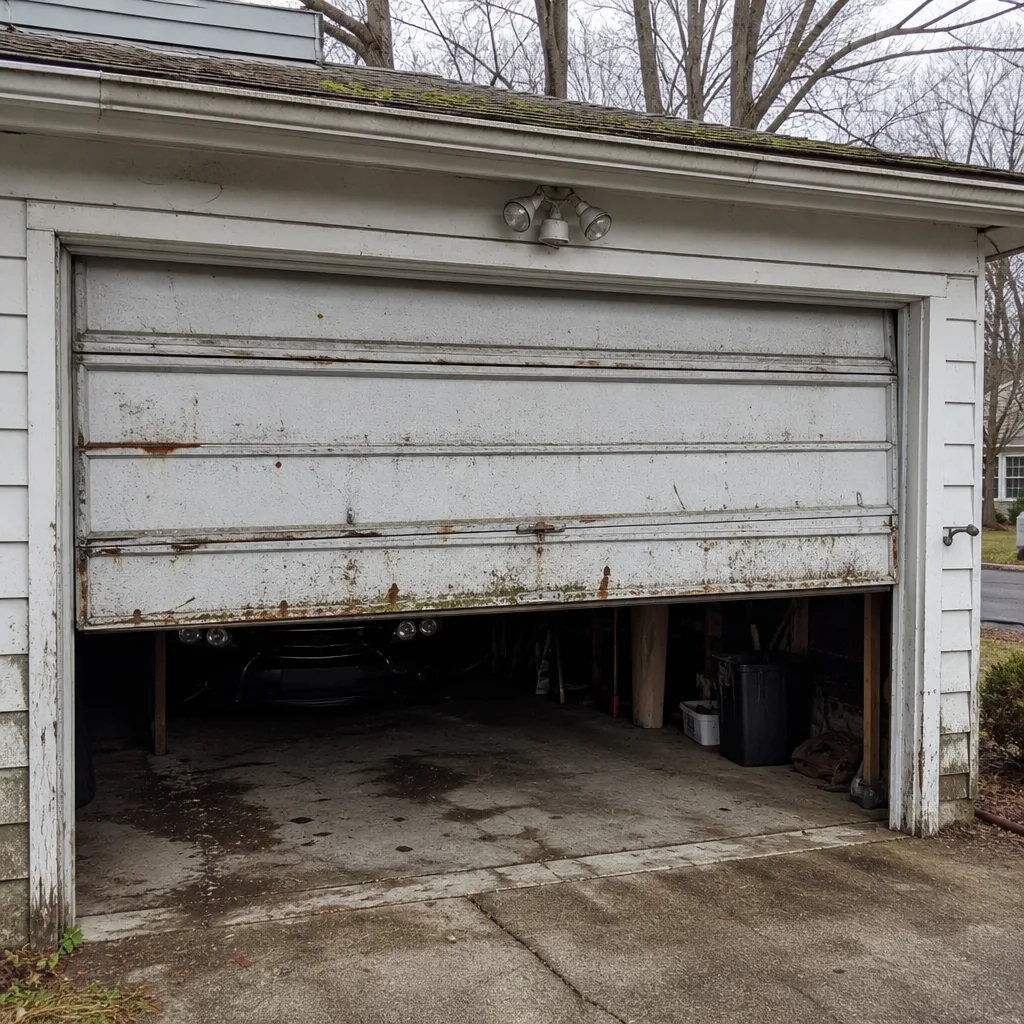
See the difference
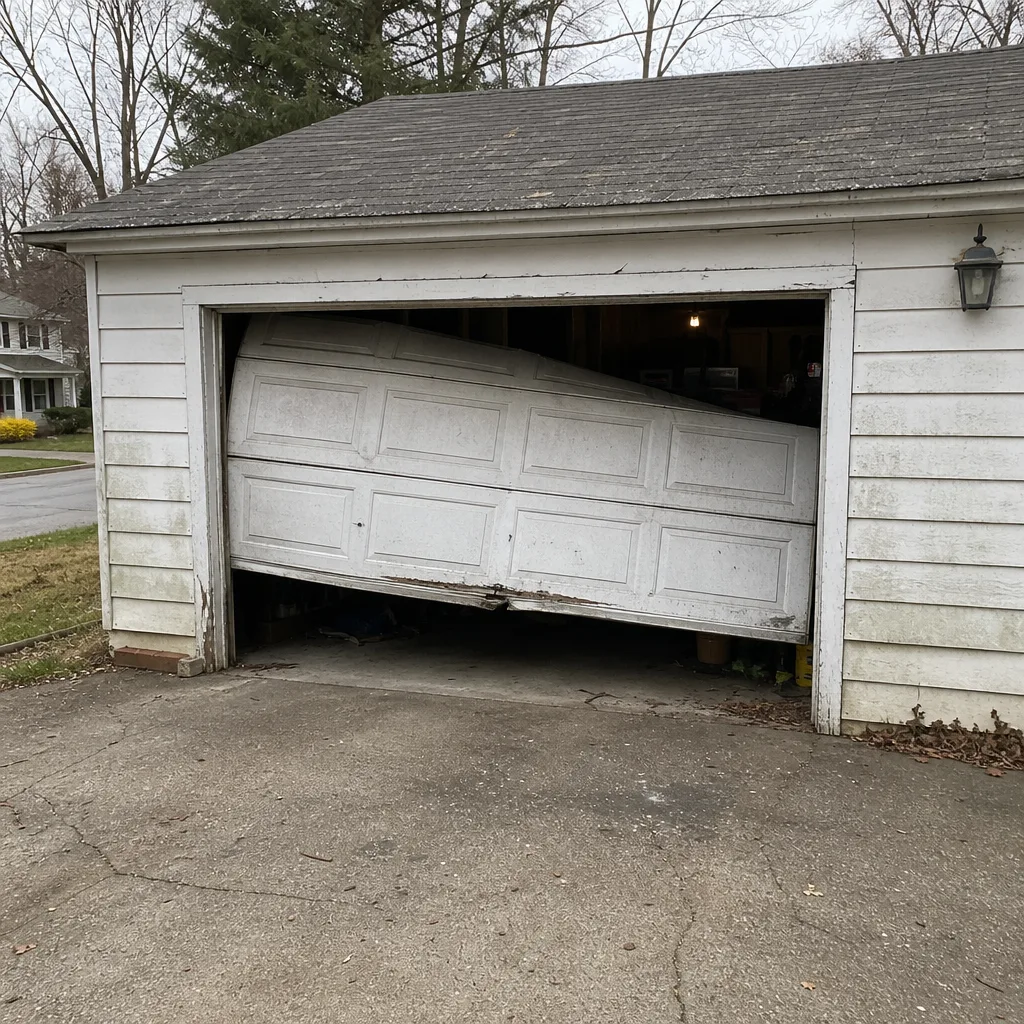 Before
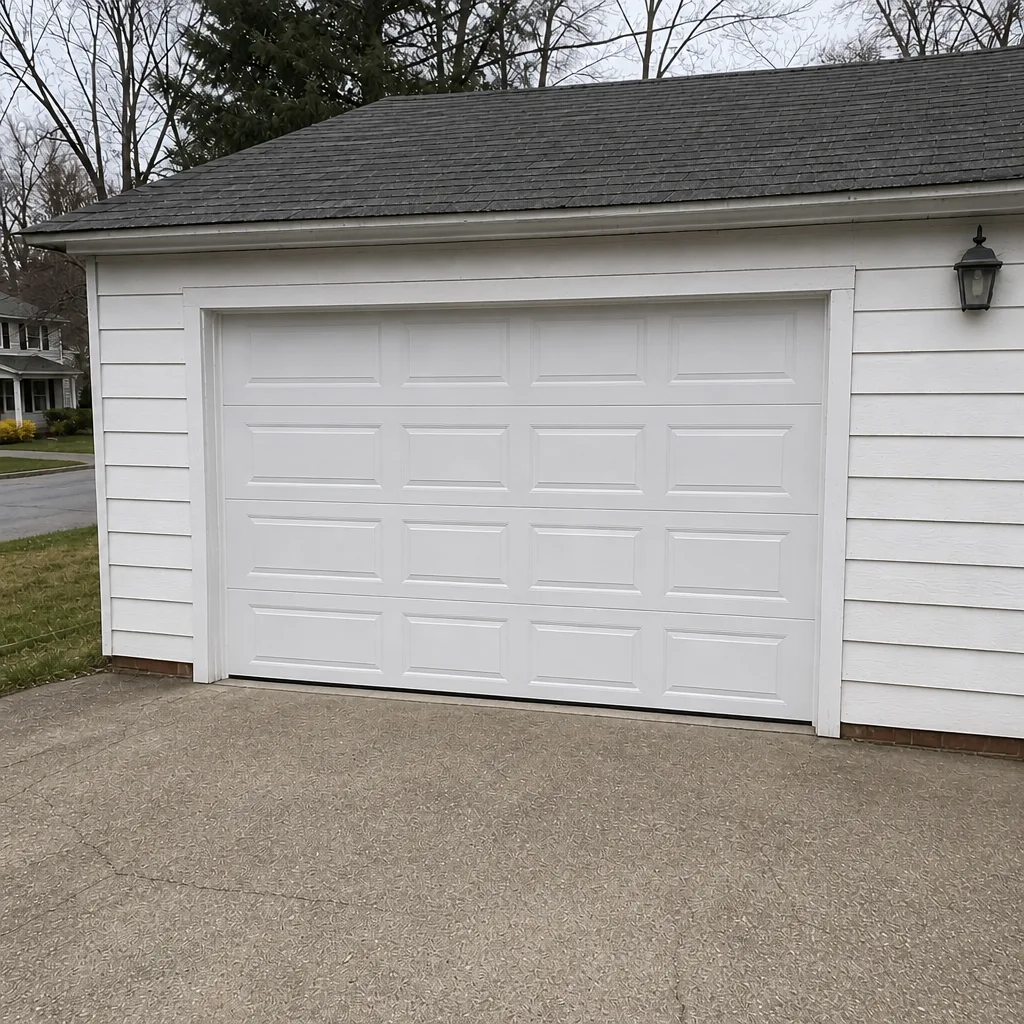 After
 Before
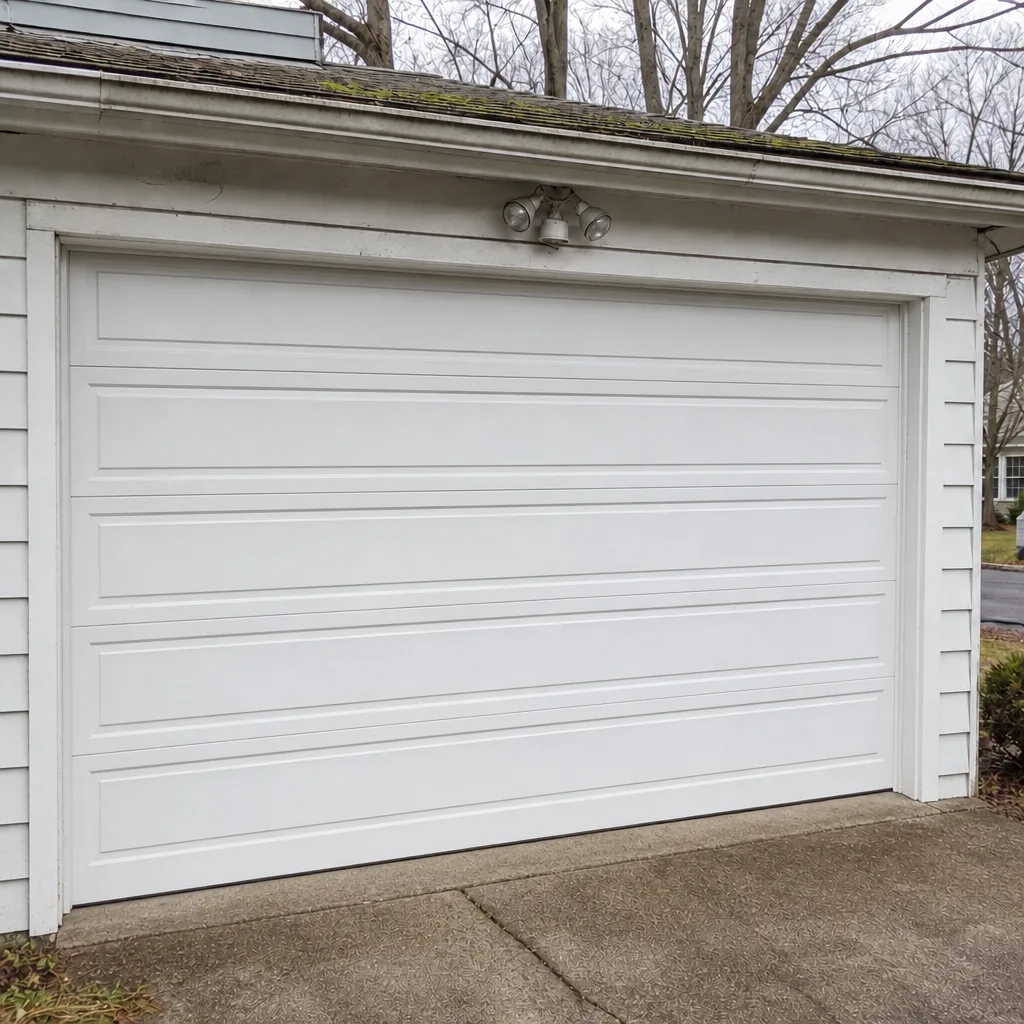 After
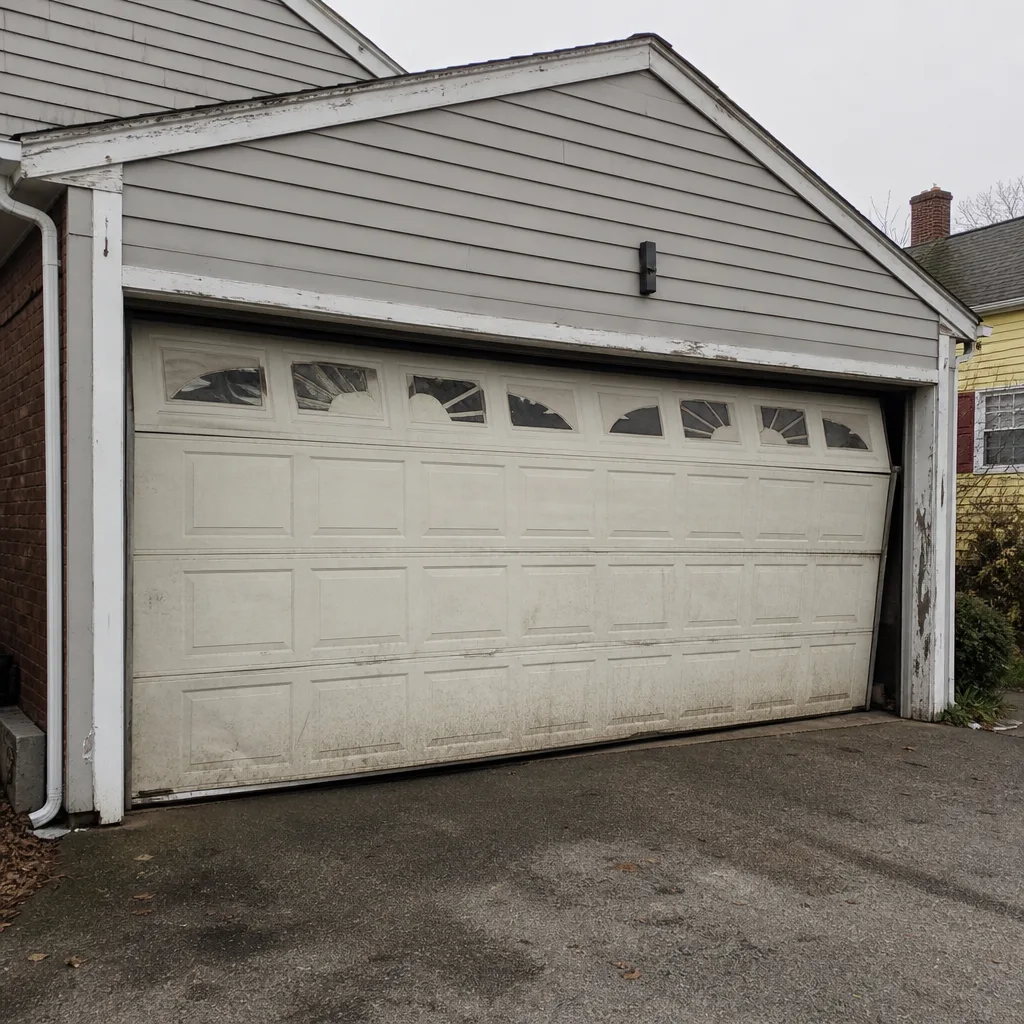 Before
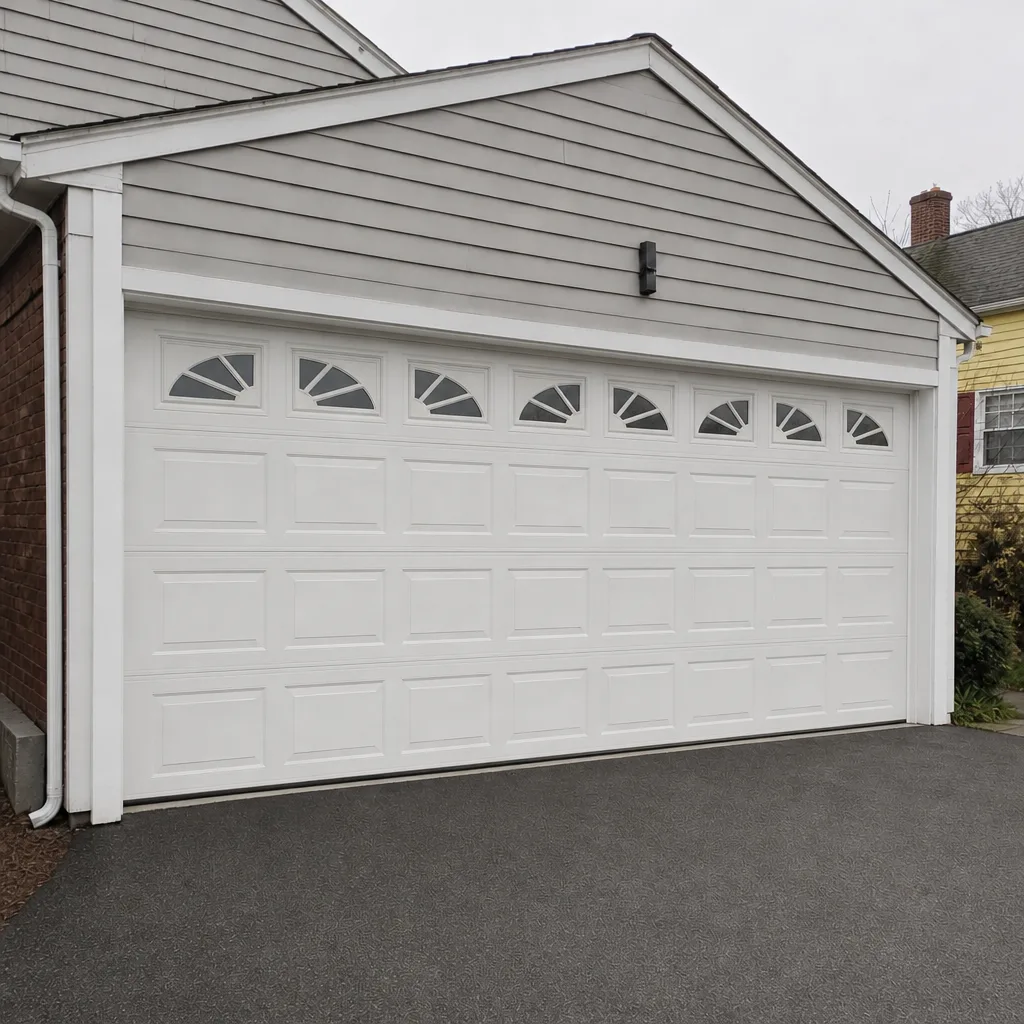 After
When to Call a Professional
There are specific situations where the best move is to put the checklist down and call. Any sign of a spring failure – a loud bang from the garage, a door that won’t lift at all, or visible spring deformation – means stop using the opener and arrange service. A cable that has slipped off its drum, come loose, or is fraying is another hands-off job; trying to reattach a cable under tension is dangerous. A door that has left its tracks, either at the bottom or along the side, needs a professional to re-seat without damaging the panels or pinch points. An opener that grinds, won’t reverse on the safety test, or won’t stay programmed beyond a battery change is also a professional item, because most internal repairs on LiftMaster, Chamberlain, Genie, or Craftsman units require opening the housing and inspecting the gear assembly. Newton Garage Door Repair Pros offers free estimates in Newton, and our team works on repair, spring work, opener service, and full installation for the eight brands we service. Call (855) 337-1889 and we’ll set up a visit.
Frequently Asked Questions
Twice a year for the full checklist – once in October before freeze season and once in April after road salt exposure ends – plus a five-minute monthly visual walk-around. Newton’s cold, salt-heavy winters are harder on garage doors than most climates, which is why the two seasonal passes matter more here than in a milder region. Call (855) 337-1889 if anything on the list looks off and you’d like a professional opinion; estimates are free.
Yes, for hinges, roller stems, and weather seals – those are routine homeowner tasks. It is not safe to touch a torsion spring, a cable, or a bottom bracket under load, and those should always go to a trained technician. If you’re not sure which part is which, our team is happy to walk through it on a service visit.
Repair costs in Newton typically run from around $95 to $350 for most common fixes, and a spring replacement is usually around $180 to $340 for one torsion spring – a matched pair is replaced together, which roughly doubles that figure. The exact cost depends on the part, brand, and door type, and our written estimate sets the final price before any work starts. Call (855) 337-1889 for an exact quote; estimates are free.
Newton winters combine three things that work against a garage door: cold stiffens any thin lubricant left on rollers and hinges, temperature swings tighten mechanical clearances, and road salt gets tracked in and sits on the lower track and bottom seal. The result is a door that moves harder than it did in October. A proper October lubrication pass with a cold-rated garage door lubricant prevents most of it.
A visible gap opening between coils on a torsion spring is the classic warning sign, and any noticeable bowing or asymmetry compared to the spring on the other side usually means that spring is losing tension. A door that’s suddenly too heavy to lift by hand or that drops quickly after you lift it partway also points to spring fatigue. Don’t adjust the spring yourself – call a technician for a visual inspection; our spring repair service is a dedicated specialty.
Same-day service is often possible for stuck doors, snapped springs, and opener failures, and we offer dedicated emergency garage door service for urgent situations where the door is stuck open, stuck shut, or off its tracks. Call (855) 337-1889 with your door type and brand, and we’ll do our best to get a technician out quickly – fast dispatch from 7am to 7pm. Exact timing depends on the day and the call volume, and we’ll tell you honestly what’s available when you call.
The Bottom Line
A Newton garage door doesn’t need a long list of checks – it needs the right checks at the right time. The October pass handles lubrication, weather seals, and a visual spring inspection before the cold arrives. The April pass clears road salt, re-lubricates, and re-tests balance and opener safety. In between, a five-minute monthly walk-around catches the small stuff. Safely inspecting torsion springs is eyes-only; spring and cable work belongs to a technician. If anything on the list looks beyond a routine check, do it in a hurry. Call (855) 337-1889 for a free estimate, and we’ll set up a visit.
Related Garage Door Services in Newton
If the checklist turns up a bigger problem than cleaning and lubrication can fix, our team covers every service on the garage door’s lifecycle. We handle garage door repair for stuck doors, track issues, and panel damage, and garage door spring repair for torsion and extension spring replacement by trained technicians. For opener issues, our garage door opener repair service covers LiftMaster, Chamberlain, Genie, and Craftsman units. And whether you’re on a reset-and-renew plan or ready for a full new-door installation, our team at Newton Garage Door Repair Pros is a single call for the entire door. We work on Clopay, Amarr, Wayne Dalton, and Raynor doors as well, plus the eight major brands we service across repair and installation.
Our technicians have up to 8 years of experience with the drive systems and door mechanisms in Newton, and every service visit begins with a free estimate so the price is quoted and agreed before any work starts. If your door needs more than a tune-up, call (855) 337-1889 – we’re ready when the door isn’t.
Written by the team at Newton Garage Door Repair Pros.
What happens when you call
- 1
A real person answersNo phone trees – you reach a local pro.
- 2
You get an upfront price rangeHonest numbers before anyone is dispatched.
- 3
A background-checked tech heads outLicensed & insured, dispatched right away.
- 4
You approve before work beginsNothing starts until you say go.